
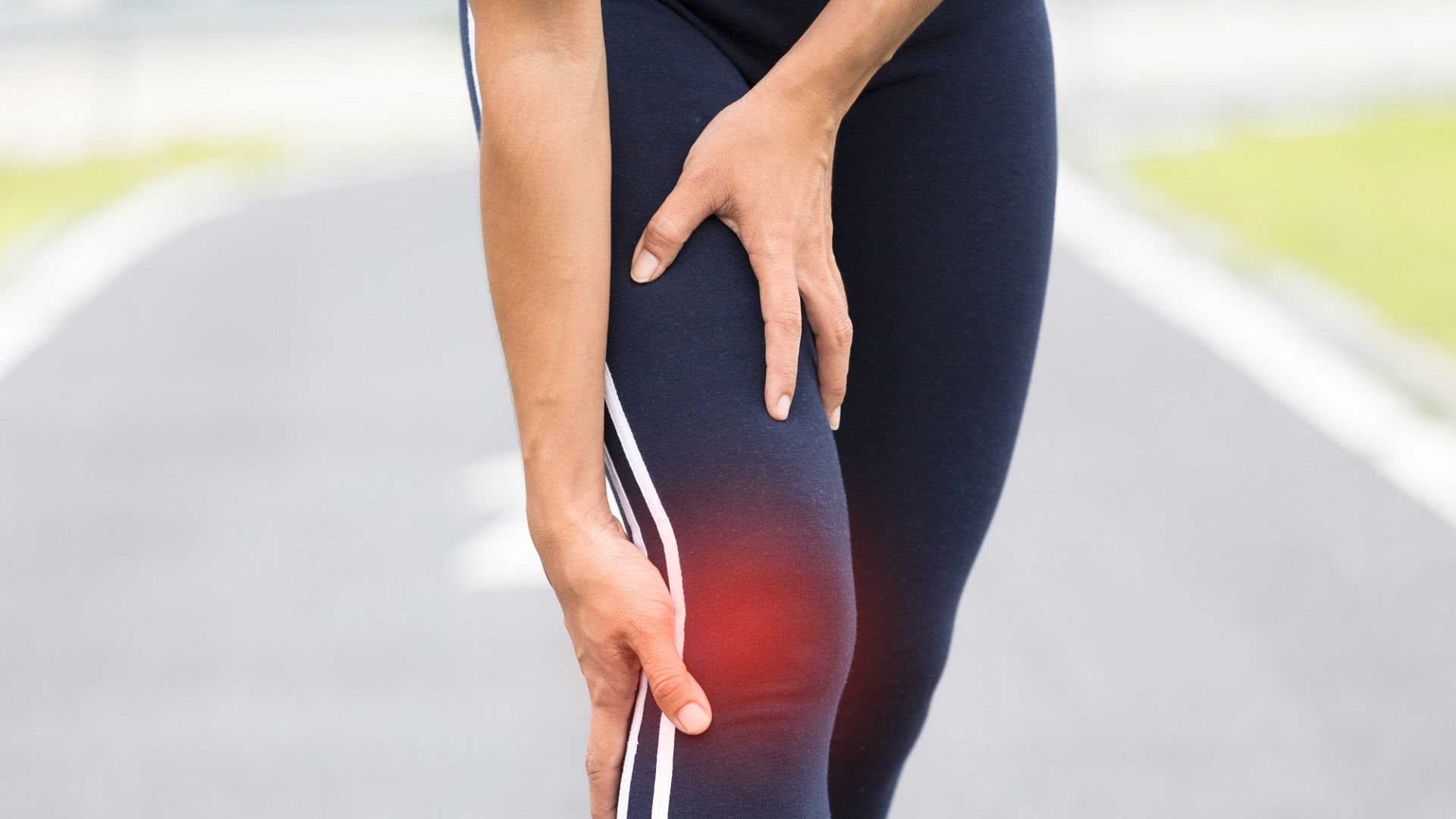
“Why does my knee hurt when I run?” That’s a fairly common question with many people, especially among runners and athletes in general.
Knee pain can be mild or intense, depending on the exact cause.
In any case, it is usually a good thing to identify what’s causing the pain and on what part of the knee you feel the pain the most.
This will help you determine whether it is best to see a doctor.
In this guide, we’ll look at common reasons for knee pain, what to do about it, and how to prevent it.
Let’s get started.
Reasons for Knee Pain While Running
If you have knee pain, it could be due to any of these causes:
#1 Runners Knee
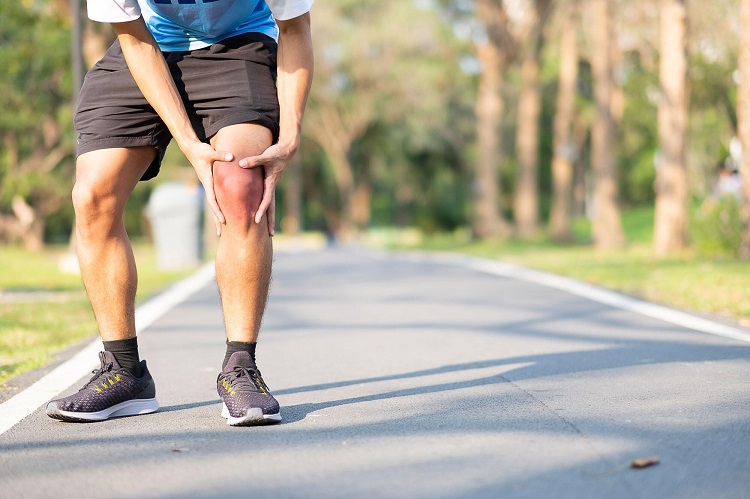
Runner’s knee is quite common with runners.
When you feel pain behind or under your kneecap, especially after running downhill, climbing up or down the stairs, or even squatting, you may have a runner’s knee.
Possible Cause
Runner’s knee might be caused by poor foot support and overtraining, among many other causes. But the most common cause is weak muscles in the thighs.
Regardless of the direct cause, your patella goes out of alignment if you have a runner’s knee. And this causes the cartilage to become irritated, and in turn, causes pain.
Possible Treatment
- Apply ice for about 15 minutes several times daily
- Reduce your mileage
- Avoid training activities that will worsen the pain
#2 Side Knee Pain
Iliotibial Band Syndrome (IT band) is commonly referred to as side knee pain. It is typically a sharp pain on the outside of the knee and is common among runners.
This pain usually starts a few minutes into a run and tends to subside a few minutes after running.
Possible Causes
Side knee pain happens when the IT band is tight and squeezes the bursa sac containing fluid. This causes stabbing pain in the knee.
Possible Treatment
- Cross-train and reduce your mileage if the pain doesn’t force you to stop running
- Consider motion-control shoes, especially if you overpronate (the outer edge of your heel first hits the ground before your foot rolls into an inward arch when you run)
- Foam roll around the IT band
#3 Jumper’s Knee

Patellar tendinitis, commonly called jumper’s knee, is another type of pain you may feel from the knee to your shinbone.
It is a common problem with athletes who engage in sports that involves a lot of jumping.
Typically, the pain is felt where the knee cap meets the shin. You may also feel it at the top of your shin or below your kneecap.
During the early stages, the pain may only be noticeable when you run. As it advances, you’ll probably feel the pain and discomfort even when you are not running.
Possible Cause
Overuse or putting too much stress on your patellar tendon can cause a jumper’s knee. The pain can get very intense when you are running.
This may be because the condition has gone untreated for too long and has resulted in tiny tears.
Possible Treatment
- Apply ice for about 15 minutes several times daily, especially if it is at the early stages
- Use a patellar tendon strap to reduce the pain
- Stop running until you no longer feel the pain
#4 Baker's Cyst (Back of Knee Pain)
You may have a popliteal synovial cyst or Baker’s cyst if the pain is accompanied by swelling at the back of your knee.
In many cases, you might feel stiffness or tightness and you might even notice a bulge in the affected area.
Keep in mind that this problem is not particularly related to running. Meaning, you don’t have to be a runner to develop Baker’s cyst.
Possible Cause
This pain can result from osteoarthritis or meniscus tears. However, the condition can be a result of an underlying issue.
Possible Treatment
- See a doctor if you think you have Backer’s cysts.
#5 Osteoarthritis
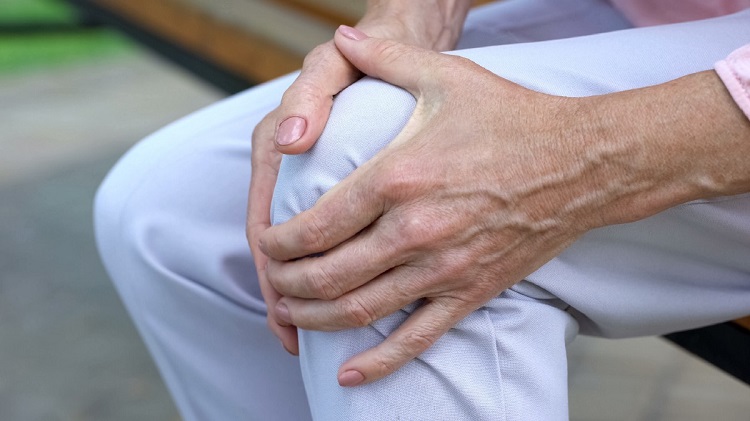
Osteoarthritis is not limited to athletes.
If you are not a runner but still feel pains in your knees when you go about your day-to-day activities, you may be dealing with osteoarthritis.
Usually, the condition causes stiffness and swelling in the knee. And it can be very painful.
Possible Cause
Osteoarthritis may be a result of the wearing out of the hyaline cartilage or protective tissues. This can reduce lubrication and cause bone-to-bone grinding.
Possible Treatment
- Limit running to only on soft surfaces
- Keep moving as that will lubricate your joints
- Take an anti-inflammatory (after consulting your doctor)
Should I See a Doctor?
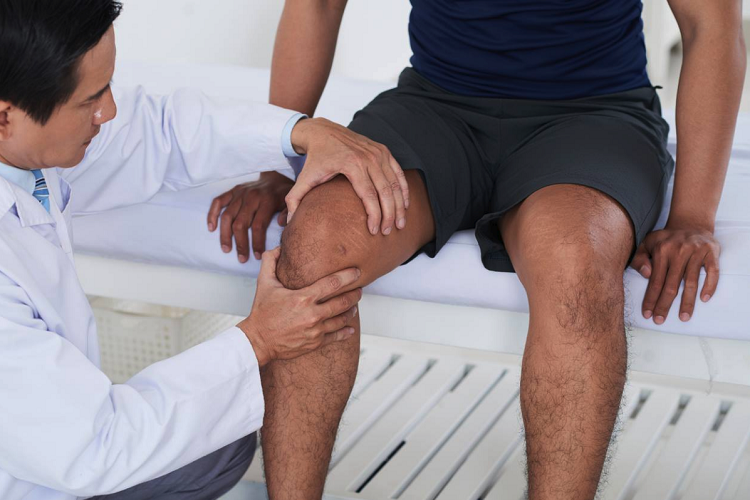
You can manage certain knee pains without seeing a doctor.
Typically, these types of knee pains are mild. They are usually triggered by too many strenuous activities within a short time.
If you feel pain in your knee because of a minor injury, you can observe its presentation for about two days to see if it is something you can handle on your own.
If the knee pain is caused by a forceful impact, you should schedule a doctor’s visit as soon as possible.
This is especially crucial if you notice some symptoms like redness, fever, warmth, and tenderness around the knee joint.
Also, it is important to see a doctor if you observe significant swelling or intense pain.
Here’s something else to keep in mind.
Even if the pain in your knee is minor, but it has been bordering you for a while, it is best to seek medical advice.
This will nip the cause in the bud before it gets worse and interfere with your daily activities.
How to Reduce Knee Pain
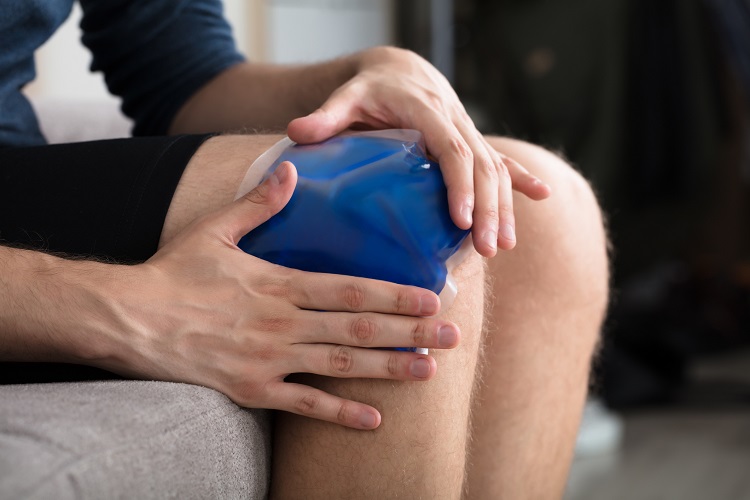
If you find yourself repeatedly asking, “Why does my knee hurt when I run?” you might want to try these remedies.
Of course, seeing a doctor can be the most effective solution, but it doesn’t hurt to attempt some form of first aid treatment at home to reduce the pain.
Reduce Sprains and Strains with “RICE”
If you experience knee pain because you took a fall, twisted your leg, or sprained your knee, you might want to remember the acronym “RICE.”
It stands for Rest, Ice, Compression, and Elevation.
Here’s how it works:
- Rest your feet, at least for a while.
- Apply some ice to your knee.
- Prevent swelling by wrapping your knee with a compression bandage.
- Keep your foot elevated while resting.
Exercise
Maintain strong muscles by exercising daily. This will help reduce knee pain and can also be a great way to treat osteoarthritis.
Of course, resting your knee if it hurts can reduce pain.
But it can also become detrimental if you don’t get enough movement. That’s because inactivity can lead to stiffness of joints and may even slow down recovery.
Exercising does not necessarily mean engaging in high-impact activities.
If you have symptoms of knee pain, consider doing low-impact activities such as walking, yoga, cycling, walking, and water exercise (like swimming).
Tai Chi
Consider practicing this ancient mind and body exercise. It can help reduce knee pain and increase overall flexibility and balance.
Tai Chi can help your body feel more relaxed. That’s because the practice involves deep breathing and relaxation. Also, it can increase your range of motion.
To top it all, Tai Chi is effective in managing chronic pain, such as knee pain.
Heat and Cold Therapy
You can reduce pain in your knees using a heating pad. While resting, simply apply a heating pad to your knee to reduce the pain.
To make it even more effective, alternate the heat application with a cold treatment.
Using cold treatment (applying a cold or gel pack) to the affected area can reduce inflammation. Do this for about 20 minutes several times per day.
How to Prevent Knee Pain in the Future

Consider the following tips to prevent knee pain in the future:
- Do a proper warm-up to get your muscles and joints ready for running. Warming up promotes the flow of joint “lubricant” (synovial fluid) in the knee cap and reduces the chances of injury.
- If you are going for a run, choose the correct running shoe designed for the terrain (pavement, trail, etc). This will save your knees from getting hurt.
- Reduce the constant pounding that your knee takes by mixing up your running terrain.
- To prevent overuse injuries, consider increasing your running mileage slowly. Also, it is a good practice to increase your stride frequency or cadence.
- Tune up your running technique so that you lean slightly forward when you run. This can reduce joint stress.
- To protect your knees, do not overstride when running. If you tend to land your foot too far ahead of you while running, you are overstriding.
- Whatever type of exercise you do, don't change the intensity drastically.
Conclusion
If you are asking the question, “Why does my knee hurt when I run?” now you know the answer. For mild pain, consider any of the suggested remedies.
It is usually advisable to see your doctor if the pain doesn’t go away.
Resources: