
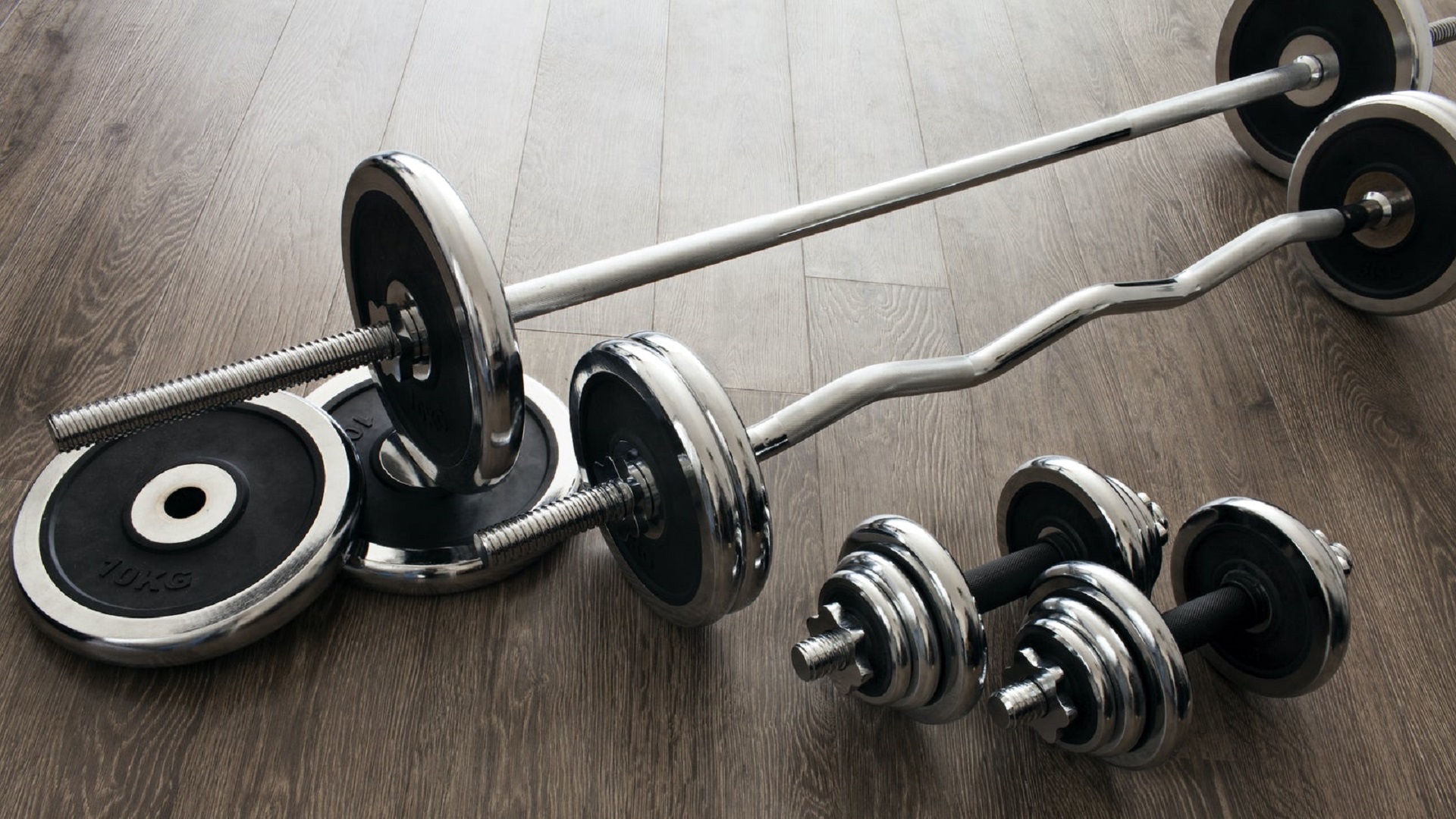
For most people, free weights (barbells and dumbbells) are the go-to tools when it comes to building muscles and increasing strength.
But here's the thing. Trying to decide which side of the fence to pitch your tent in the barbells vs dumbbells debate can be tricky.
Which tool is better? Should you use both or focus on only one?
Instead of going on about which tool is better, we think a more productive approach would be to figure out when and why you should use which tool.
And that's what you'll get from this guide. Let's jump right in!
Barbell: Types & Uses
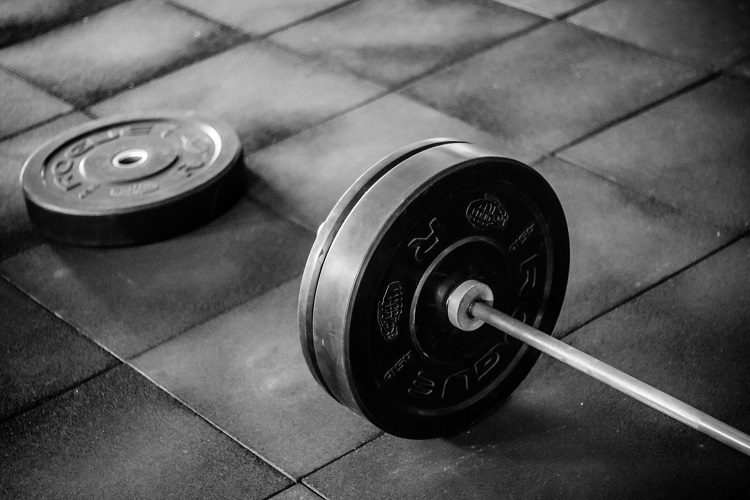
Typically, a barbell is a steel bar about 1 inch thick and measures around 4 to 7 feet long. In addition to the standard bars, several other types of barbells exist, including:
- Deadlift bars
- EZ bars
- Log barbells
- Powerlifting bars
- Swiss bars
- Axle bars
- Trap or Hex bars
- Buffalo bars
- Olympic bars
Ideally, barbells are excellent for compound moves. They should rank high among your training tools if you're looking to do exercises that will work multiple muscles and joints at the same time.
Such compound moves include:
- Lunges
- Squats
- Deadlifts
- Row
- Rack-pulls
That being said, barbells can also be used for isolation workouts, such as wrist curl, preacher curl, and barbell curl.
Barbells: The Advantages
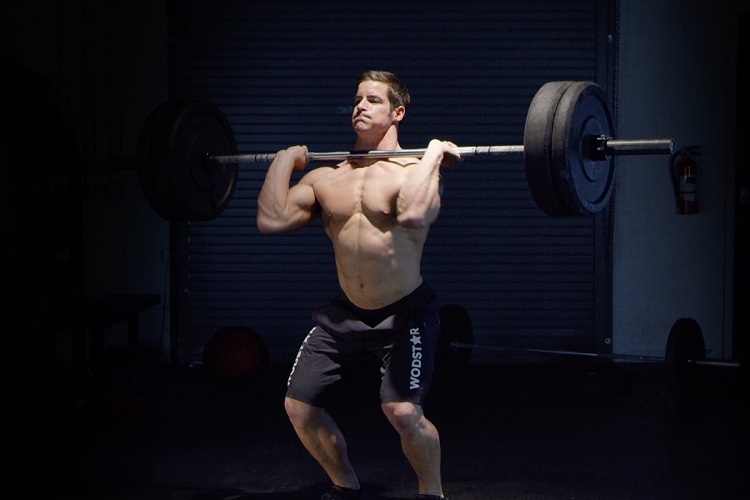
Barbells feature engraved knurled crosshatch patterns. This helps you to maintain your grip when lifting the bar.
But that’s not all.
Here are some other advantages of training with barbells:
- Great for Lifting Heavier Weight: Generally, you can go heavy or lift heavier weights with barbells. Little wonder it is the go-to tool for Olympic weightlifters and competitive powerlifters. If you want to make the most out of your lifts, use barbells before training with cables, machines, and dumbbells.
- Excellent for Chest and Legs: Barbell exercises, such as bench press, squats, and lunges, are great for building up your chest and legs rather quickly and efficiently.
- A Better Choice for Explosive Training: The level of explosiveness and intensity available with a barbell workout is definitely higher compared to training with a dumbbell. If high-intensity workouts are your thing, you’ll want to go with barbells particularly for exercises such as snatch and deadlift.
Barbells: The Drawbacks
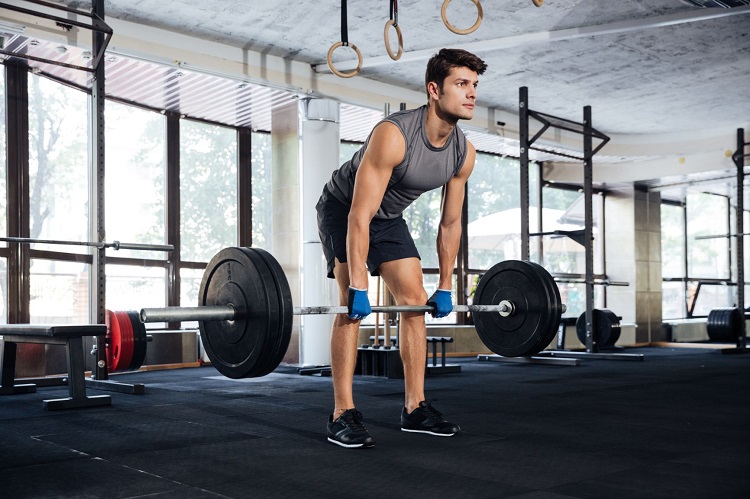
Meaningful Progress is Usually by Increasing the Weight
Perhaps the greatest downside of barbell training is that you have to load more weight on the bar if you must make any significant progress.
Although this might not apply to everyone, it is the case with many people.
And putting the body under extreme stress by lifting a heavier load each time isn’t necessarily a good thing as you’ll see in the next drawback.
Can Compress Joints and Lead to Injury
While lifting heavy weights can make your muscles grow larger, it can compress your joints in a way that can cause issues.
This is especially true if you lift heavy weights regularly without allowing your joints to actively decompress and release tension.
With time, diminishing returns will set in and you’ll notice a plateau in performance.
It won’t be long before a regress in progress follows. And that will likely be followed by pain and injury!
Dumbbells: Types & Uses
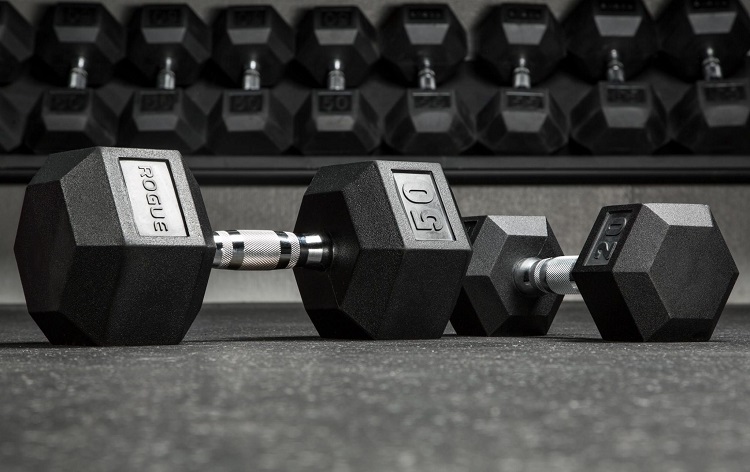
Dumbbells come in a few different shapes and sizes. Generally, they are grouped into a few different categories such as:
- Studio dumbbells (typically small options mostly used by women in the gym)
- Spin-lock dumbbells (a widely popular choice for working out at home)
- Selectorized dumbbells (feature advanced locking mechanisms for increasing or reducing the weight)
- Fixed hex dumbbells (offer more stability than standard types)
Dumbbells are great for isolation exercises, although they can be used for compound moves, too.
That means you can use them to do squats, reverse flies, hammer curls, and more.
The most important thing about dumbbells is that they encourage unilateral movements. In other words, they can help correct any muscle imbalances and improve your form.
Dumbbells: The Advantages
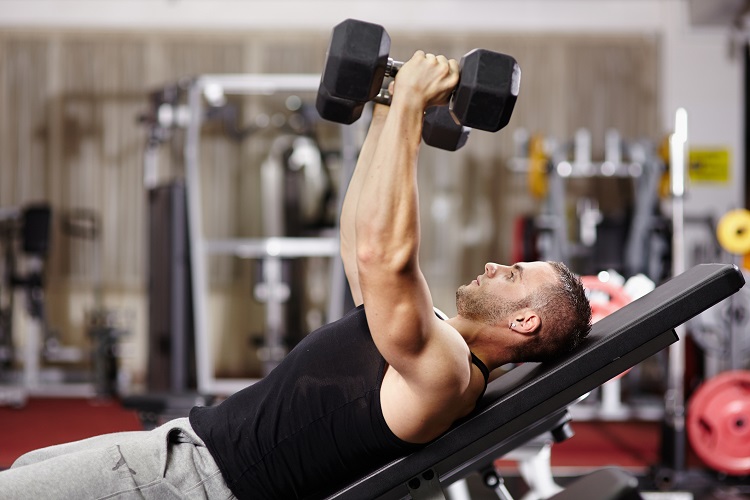
Besides being cheap and portable, dumbbells have some other amazing advantages, including:
Great for Beginners
If you’re just getting into lifting weights and strength training, starting with a dumbbell can help improve your coordination.
That’s mostly because you will need to constantly stabilize the weights in each hand.
Safer
Unlike a barbell, a dumbbell isn’t going to pin you down if you can’t complete a rep. You can simply drop the weight at any time without worrying about getting hurt.
The chance of injuring yourself with a dumbbell is pale in comparison to a barbell.
Evens out Imbalances
Many people have strength imbalances, regardless of the experience level. This might be one arm being stronger and performing better than the other or something similar.
Training with a dumbbell is a great way to correct such imbalances.
Greater Level of Muscle Activation
Lifting weights require the activation of muscle units or fibers.
Unlike barbells that limit your movement to a narrow range of motions, dumbbells offer a greater range, and this is important for activating more muscle fibers.
Dumbbells: The Drawbacks
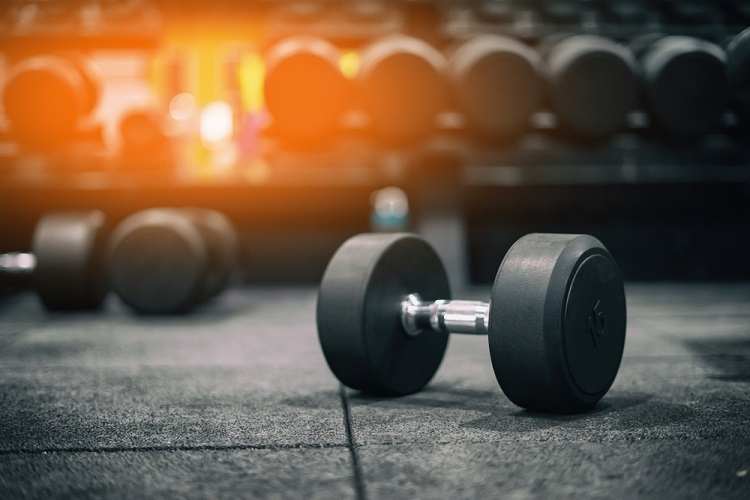
Difficult to Target Multiple Muscles
Dumbbell is a poor choice of training tool if your goal is to target multiple muscles at the same time.
That’s because dumbbells are mostly designed for isolation exercises that focus mainly on one muscle.
The Weight Increase Might be Too Much for Some Exercises
In most cases, dumbbell weights come in 5 lbs increments. While that isn’t generally a bad thing, it might be too much for some trainees to handle at a go.
For example, progressing from a 15 lbs to 20 lbs dumbbell is a 25% jump and that might not be suitable for some people.
Barbells vs Dumbbells: Similarities
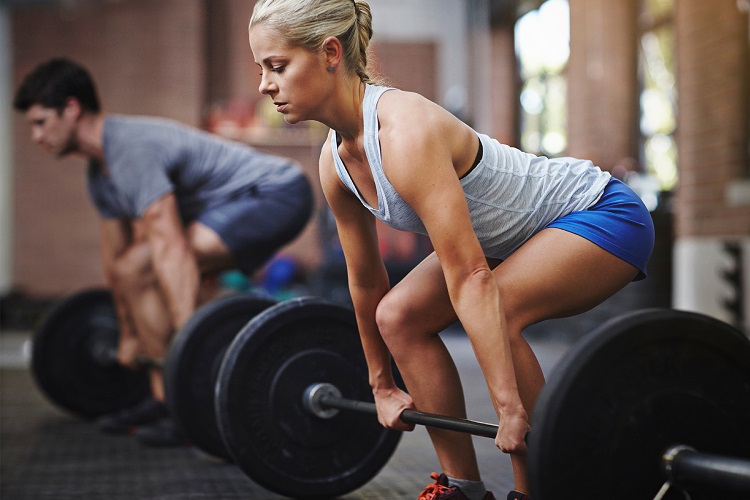
First of all, both training tools are free weights. That means you can pick them up and move around freely while training.
Unlike training with machines, your movements are fixed when using free weights. This allows you to work your muscles harder, work against gravity, and engage your stabilizer muscles.
Barbells vs Dumbbells: Differences
Although there aren’t plenty of similarities between these two amazing free weights, there are quite a few differences.
One of the major differences is that barbells work multiple muscles while dumbbells target one muscle.
Apart from this obvious difference, here are some other things that set them apart.
You will want to consider these carefully, as they can help you figure out which tool to focus on in your training.
Ease of Use
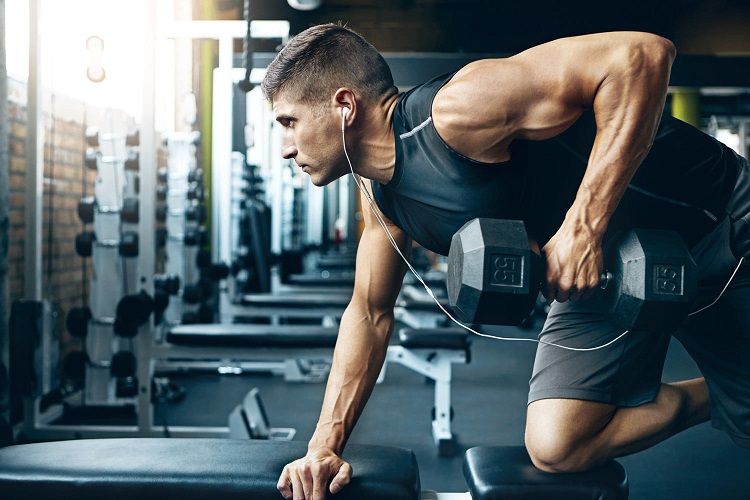
Barbells are pretty straightforward to work with. Indeed, they offer limited movement but that’s exactly what makes them easier to use.
For example, everything you need to perform squats safely and easily is already in place. The safety bar and bar rests are in position when the barbell is on your back.
But that’s not to say that performing barbell exercises are easy.
General comfort can be an issue, especially if you are training with Olympic barbells.
For example, finding the right position for your hand might result in increased pressure on your wrists, elbows, and shoulders.
On the flip side, it can be a bit tricky to use dumbbells. For most people (especially beginners), it takes quite a lot of practice to get the grips right.
Thankfully, all of the challenges you will need to overcome to get better at using dumbbells are actually beneficial as they allow you to target your weaknesses and improve with time.
Range of Motion
Training with a barbell means holding the bar with both hands in a somewhat fixed position. Of course, this helps you to stabilize the weight so you can lift it more easily.
However, it only allows a partial range of motion.
This means you will get less stretch and inferior results when it comes to building mass and strength.
In contrast, dumbbells are typically held in one or both hands and not fixed to a bar. This gives you the option to lift either one or both dumbbells simultaneously.
This is another way of saying you get a greater range of motion with dumbbells, and it is even more challenging to stabilize the weights.
By allowing your arms to move more freely, dumbbells are a better choice for training in a full range of motion.
And in addition to reducing the risk of injury, it is a lot easier to build mass and strength with dumbbell exercises.
Stability While Training
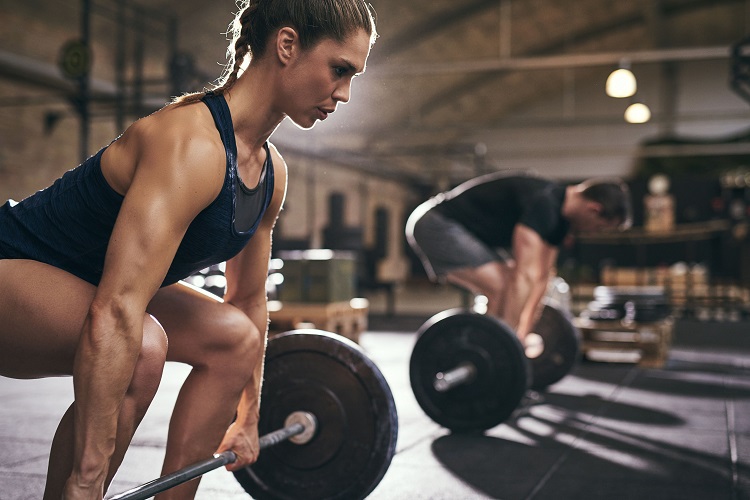
Ever wondered why most people can easily lift heavier weights with a barbell than the weights of two dumbbells combined?
It’s because it takes only a few stabilizer muscles to do barbells exercises compared to dumbbell workouts.
Also, barbell exercises work more muscle groups without wasting energy. Typically, the load on the bar is evenly distributed. This gives you more stability as you do each rep.
Barbells are more stable when exercising, especially inside a power rack. Usually, you are performing only one move at a time.
But that’s usually not the case with dumbbells.
Although you get a greater range of motion when using dumbbells, you won’t have the same level of stability available with using barbells.
Training Efficiency
You can get more reps quickly with a dumbbell than a barbell. That’s because it is a lot quicker to change over the weight in dumbbells than loading and unloading a barbell.
On the other hand, getting a rack set up for a barbell exercise can take some time.
Also, your muscles need to recover between sets when you are performing heavier lifts with barbells.
This means you will end up needing more time doing barbell exercises than you would for dumbbells training.
Home Gym Compatibility
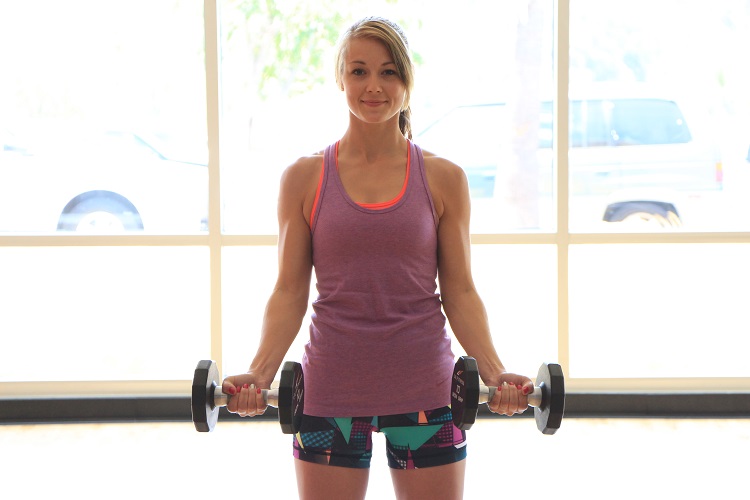
Dumbbells are a great way to get some incredible strength workout at home because they don’t take up much space.
You’ll need more space to set up a proper barbell power rack.
Thankfully, you can go for shorter barbell options, such as 6ft international weight bars and half power racks if you don’t have plenty of room in your home gym.
Final Verdict
Okay, now that we've seen the differences and similarities between barbells vs dumbbells, which tools are better for your workout?
Well, there is no right or wrong answer here.
Instead, it all comes down to your experience level, what you're trying to achieve, and of course, personal preference.
Perhaps, a better way to look at these training tools is what they have to offer rather than which one is better than the other.
Thankfully, you've read this guide so you should already know what each tool can help you to achieve.
To summarize, you'll be better off with dumbbells if you're looking to build size and mass. You'll also want to use dumbbells for endurance-style training and accessory lifts.
This means you can use them for sets of 8 to 12 reps or even more. On the flip side, barbells are a better option for those who want increased strength and functionality.
And since they let you progressively overload more effectively, barbells are better for heavy lifts. It is usually a good practice to limit the use of this training tool for sets of 1 to 6 reps.
But take our advice: Use both training tools!
That's the optimal way to get the most out of your training. By mixing both barbells and dumbbells, you will improve your chances of building muscles and increasing strength.
After all, there's nothing wrong with getting the best of both worlds, right?
Conclusion
Both barbells and dumbbells are excellent training tools, especially if you want the most out of your lifting program.
While dumbbells are great for beginners, they can help experienced trainers isolate or target specific muscles better.
If you've been training with barbells for a while, incorporating exercises that require dumbbells can reduce your risk of injuries.
In any case, it is usually a good practice to train correctly, no matter the equipment you choose or the workout routine you do.
So, be safe while you work those muscles and build strength with the tool that works best for you.
Resources: