
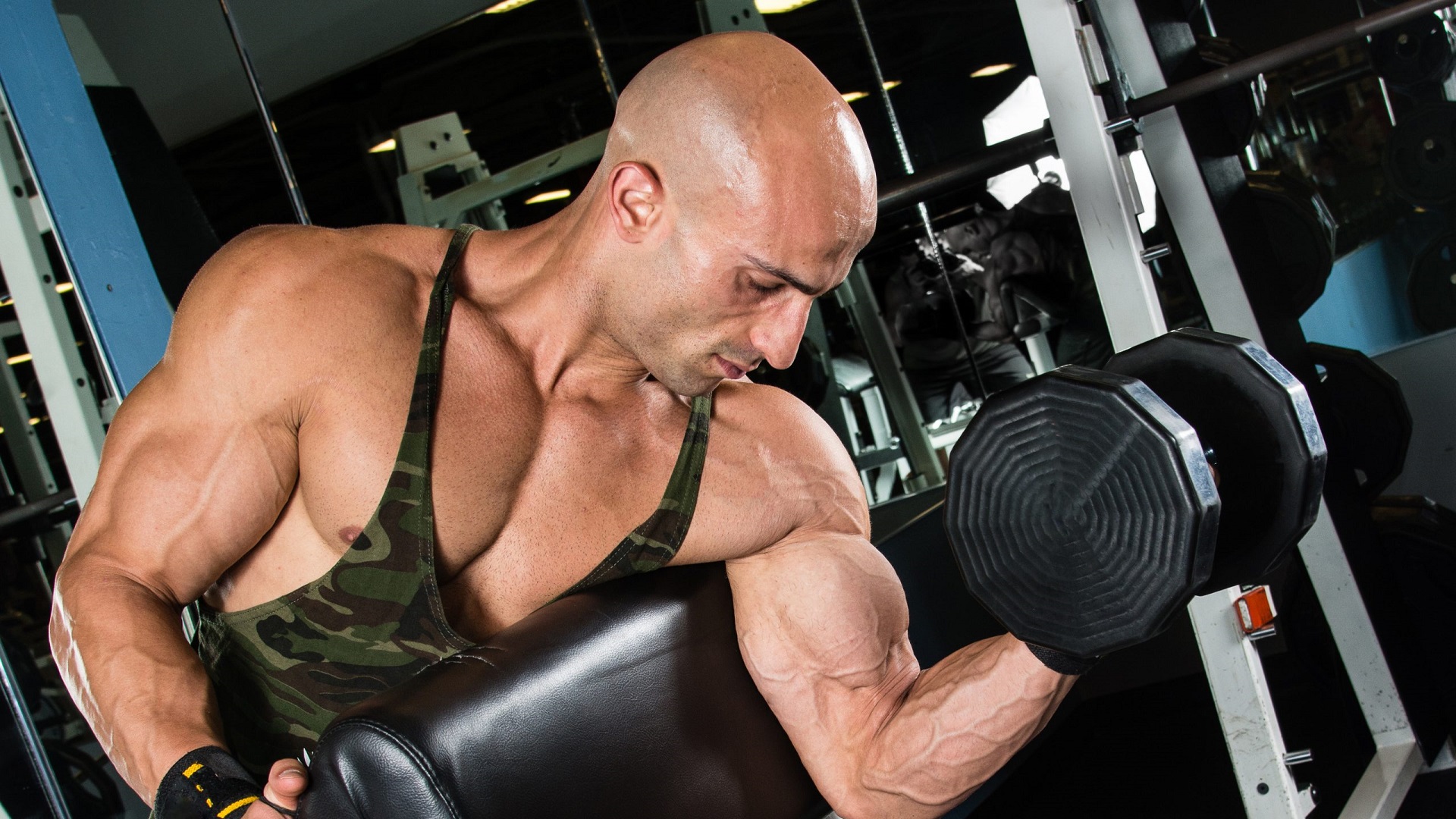
See those killer arms you want to get so bad?
The trick to quickly developing them is to add a few compound arm exercises to your workout routine.
The good thing about these exercises is that they activate several muscle groups at the same time.
The result? You will improve your strength while building your arm muscles!
But here’s the best part. These compound arm moves can help you achieve more within a shorter period.
In essence, you will be optimizing your workout efficiency and getting enviable upper body results!
Here are some of the best compound arm exercises.
#1 Pull-Up
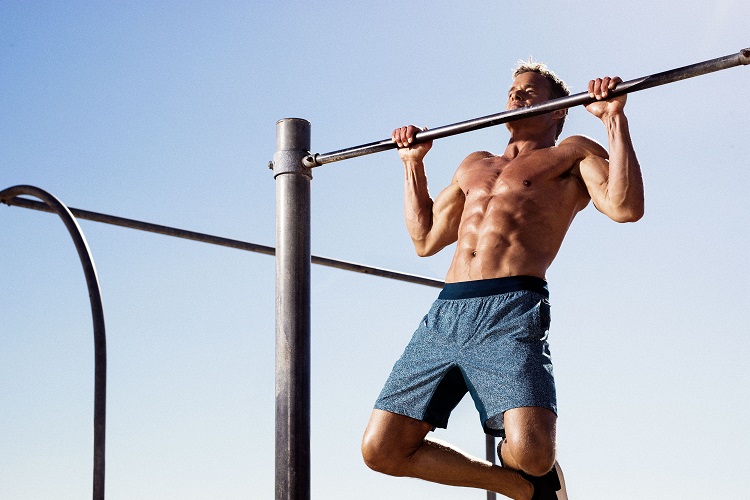
This classic upper-body strength exercise has you pulling your body up while flexing your elbows, shoulders, and arms.
The good thing about the move is that you can hang from a pull-up bar for about 10 to 30 seconds, even if you are completely new to exercise.
Starting this way can help you strengthen your arm and back muscles before going ahead to complete the move.
Benefits
Pull-ups work your chest, lats, and shoulders. In addition to building an impressive arm, the exercise is great for strengthening the back muscles.
Looking to improve your grip strength?
Add pull-ups to your workout routine.
How to Do the Pull-up
- Using an overhand grip, hold onto a bar, keeping your hands shoulder-width apart
- You can choose to bend your knees while hanging from the bar or extend your legs if you prefer
- Engage your core and pull your shoulders back and down
- Pull yourself up as far as you can go, preferably until your chin is above the bar
- Hold briefly at the top position while maintaining the tension in your core
- Slowly lower yourself back to the starting position
- Repeat until the set is complete
#2 Standing Arnold Press
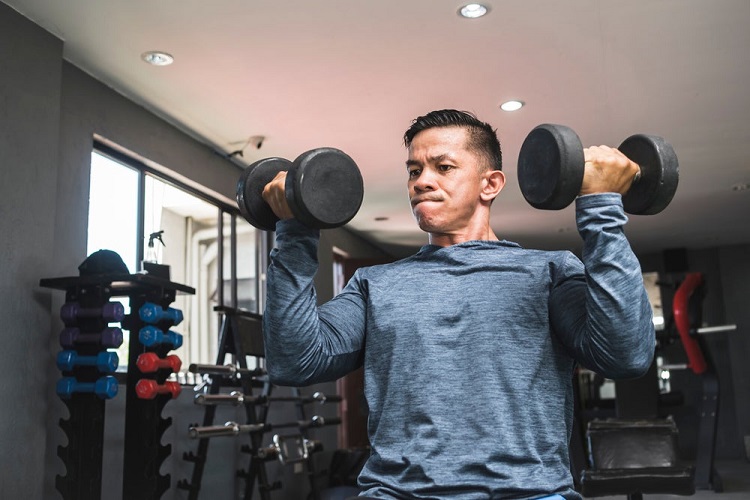
Made popular by Arnold Schwarzenegger, this exercise will increase your upper body strength.
Of course, you might not necessarily have the former bodybuilder turn actor’s impressive body. But doing this exercise can help your upper body achieve its full potential.
Benefits
The standing Arnold press hits all the sections of your delts.
What’s more, it recruits several stabilizing back muscles, making it a great exercise for strengthening the back.
Plus, it works your core and shoulders.
While you can perform the exercise seated, you’ll be missing out on the above benefits. However, it works the shoulders harder and improves your form.
How to Do the Standing Arnold Press
- Sand with your feet shoulder-width apart and hold a dumbbell of equal weight in each hand
- Hold the dumbbells with your palms facing you and keep your elbows bent as you would in the top position of a dumbbell bicep curl
- Engage your core and tuck in your pelvis
- Press the dumbbells overhead while rotating your wrist simultaneously so that your palms are facing away from you when you are at the top position
- Hold the top position for a brief moment, making sure your biceps are close to your ears
- Under control, slowly reverse the move and bring the dumbbells to the start position with an underhand grip
- Repeat until the set is complete
#3 Close-Grip Bench Press
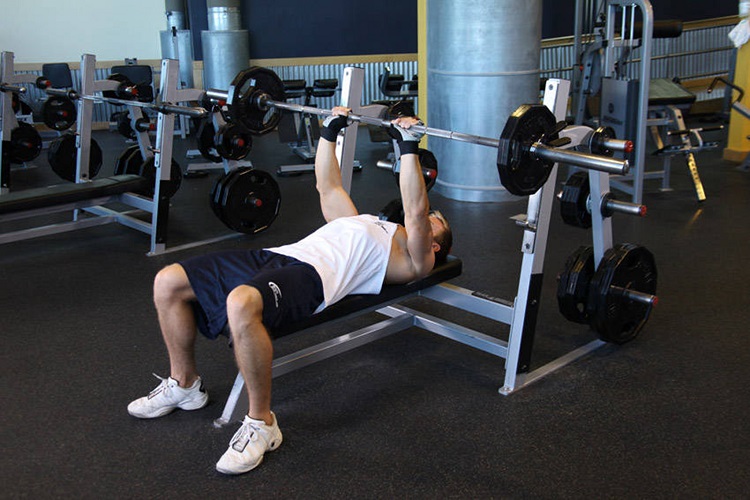
The bench press variation is harder than the regular bench press with a wide or medium grip.
By removing or minimizing the involvement of the pectoral muscles during the press, the close-grip bench press provides a tougher challenge for your triceps.
Benefits
Besides thoroughly working the chest, triceps, and shoulders, the narrow grip increases your time under tension and improves your range of motion.
How to Do the Close-Grip Bench Press
- Lie face up on a workout bench with a barbell rack above you
- Plant your feet firmly on the ground
- Hold the barbell in a close-grip (typically, around shoulder-width apart)
- Unrack the barbell and hold it above you
- Brace your stomach, keep your elbows close to your body, and slowly lower the barbell to your chest
- Now push the bar up until your arms are locked
- Repeat until the set is complete
#4 Barbell Overhead Press
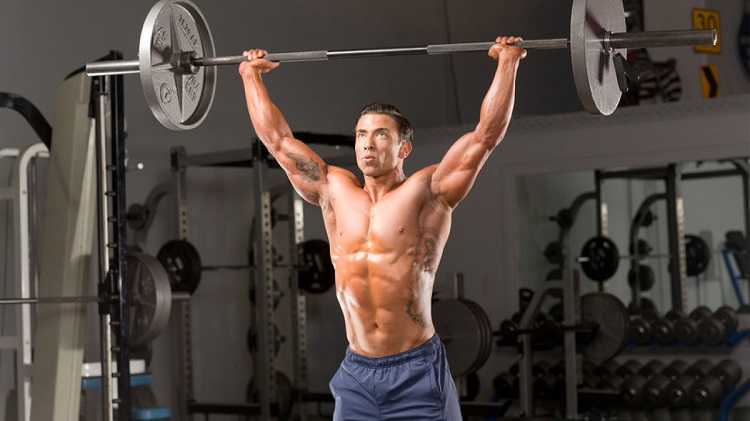
This move requires pressing a barbell overhead from a front-rack position. The exercise is suitable for trainers of all levels.
Benefits
This move targets the muscles in your arms, upper back, chest, and shoulders.
You can perform the barbell overhead press while sitting or standing. But we suggest you get on your feet to recruit more muscle groups.
This will help you gain more balance as you support the lift. It will also work most of the large muscles in your upper body.
How to Do the Barbell Overhead Press
- Stand upright with your feet slightly hip-width apart
- Bring the barbell to the level of your shoulders, holding it with a grip that's slightly shoulder-width apart and palms facing away from you
- Breathe in as you tighten your core and press the barbell overhead (lift it above your head) so that your arms are fully extended
- As you press the bar overhead, move your head slightly back and squeeze your legs, glutes, and core to keep your pelvis tucked in
- Slowly lower the barbell back to your shoulder level
- Repeat until the set is complete
#5 Kettlebell Farmer’s Walk
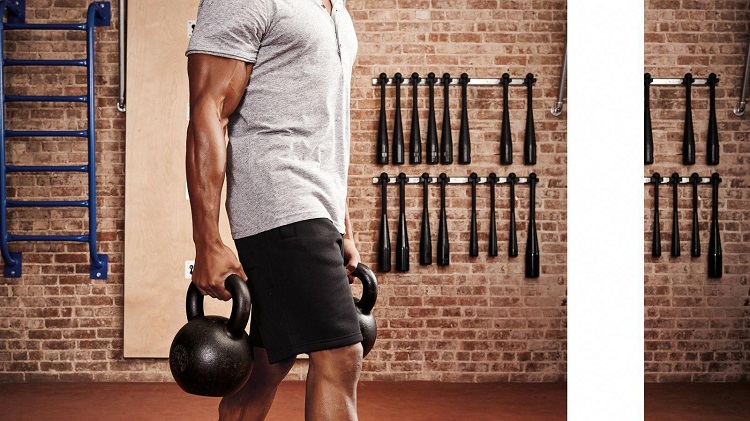
Also called the farmer’s carry, the kettlebell farmer’s walk is a good way to build your arm muscles while developing your grip strength.
You can use dumbbells for this exercise if kettlebells are not readily available. But if you want to make it even more challenging, grab a trap bar!
Benefits
Besides improving your grip strength, the kettlebell farmer’s walk works several muscles, including the triceps, biceps, and shoulders.
It also targets the hamstrings and quads, making it a great full-body exercise.
How to Do the Kettlebell Farmer’s Walk
- Hold a kettlebell of equal weight in each hand in an overhand grip with your palms facing your body
- In a shoulder-width stance, maintain an upright torso and let the kettlebells hang from your hands by your side
- Engage your core and walk in a straight path across the length of the floor while maintaining an upright position and keeping your core tight
- Stop at the end of the room and walk back to the starting position without turning
- Repeat until the set is complete
#6 Close-Grip Chin Ups
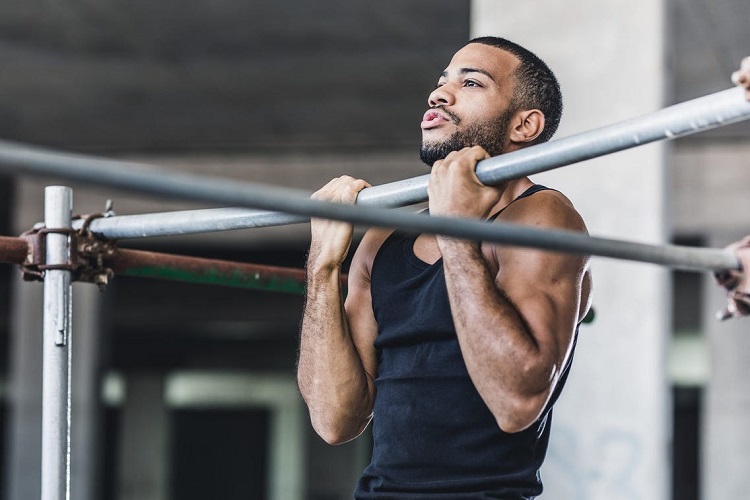
In this chin-up variation, your grip is narrower so the biceps act as a helper as you pull yourself to the top position.
That’s mostly because as your hands are closer together, the biceps contribute more than they would if your grip was wider apart.
Benefits
This compound arm exercise works the triceps and biceps. It also strengthens your core and back muscles.
How to Do the Close-Grip Chin Ups
- Hang onto a bar with your palms facing you in an underhand grip position (make sure to place your hands closer than you would normally do in a regular chin-up)
- With your knees bent or legs fully extended, squeeze your core and pull yourself up
- Go up as high as you can, preferably until your chin is above the bar
- Slowly lower yourself to the starting position
- Repeat until the set is complete
#7 Diamond Pushup
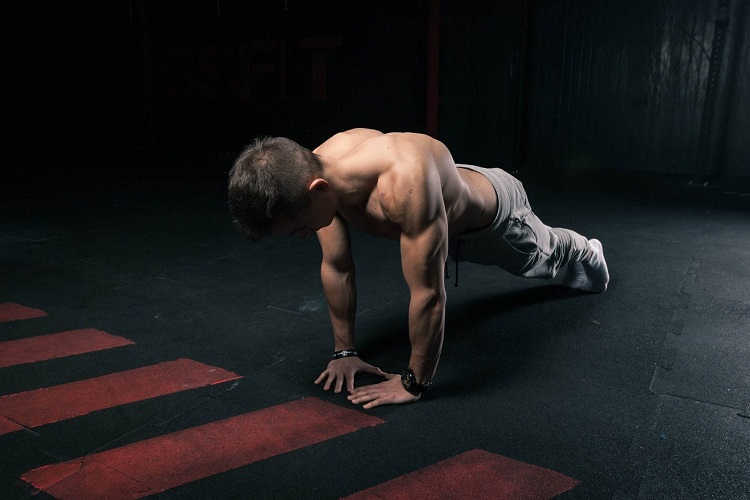
You don’t need any piece of training equipment to do this pushup variation.
On the surface, the diamond pushup seems to work the same muscles (primarily, the triceps) as the regular pushup.
But that’s not exactly correct.
The diamond modification works your triceps a bit more.
Why is that?
Your hands are positioned close together in this move.
Plus, keeping the diamond shape directly in line with your chest means there is less strain on your shoulders.
Benefits
In addition to the triceps and shoulders, this compound arm exercise also works your chest to give you a great upper body.
How to Do the Diamond Pushup
- Get into a high plank position with your legs fully extended behind you
- Bring your hands together so that your index fingers and thumbs are touching to form a diamond shape
- Take a deep breath, keep your core tight, and bend at the elbow as you lower your chest to the ground
- Stop just above the ground so that the diamond shape form by your fingers and thumbs are directly in line with your chest
- Push yourself back up as you exhale while maintaining a straight line in your body
- Repeat until the set is complete
Final Thoughts
Adding some of these compound arm exercises to your workout routine is the way to go, whether you want to get rid of arm flab or build impressive biceps and triceps.
Here’s something to keep in mind.
Don’t push yourself beyond your capacity. You want to stay safe while performing these exercises within your current fitness level.
If for some reason you can’t perform bodyweight exercises, you can use assisted chin-up or pull-up machines.
You will still get the full benefits of compound arm movements.
Resources: