

Your heart rate during training determines how far you can go. It tells you whether to increase the intensity of your workout (in cases of low heart rates) or to stop the exercise altogether (in cases of high heart rates).
As you keep track of your heart rate, you will be able to get the best of your daily workouts and attain your fitness goals without putting yourself at risk.
Read on to learn what’s a good heart rate when exercising and how far you should push yourself during your daily workouts.
Why is Heart Rate Important?

Cardiovascular exercises increase your heart rate. Factors like fitness level, age, medical condition, and the present activity you are engaged in can determine your ideal heart rate for training.
Your heart rate is an important indicator that helps you keep track of how much energy you burn during training.
It can help you determine when and how long you should engage in an exercise.
Indeed, working out offers plenty of positive benefits to your heart health. But you have to do it correctly to get any of those benefits.
Ignoring your heart rate when exercising can cause more harm than good.
When you pay attention to your heart rate during workouts, you will enjoy some or all of the following positive effects:
- Reduces your risk of developing diabetes.
- Lower your blood pressure.
- Help to reduce inflammation throughout your body.
- Help you maintain good and healthy body weight.
- Keeps your heart healthy by preventing heart diseases.
- Boosts the muscles’ ability to draw oxygen from the blood, and reduces the need for the heart to supply more blood to the muscles.
- Reduced risk of sudden heart attack or other chronic heart problems.
- Eliminates stress hormones that put an extra burden on your heart.
Exercising benefits your heart significantly. To make it even more beneficial for your heart, it is important to maintain a healthy lifestyle in addition to eating a good and balanced diet.
Exercising With Too Low Heart Rate

It is normal for your heart rate is to go up or increase when you are performing exercises. Your heart rate will even go higher when you do cardio exercises.
This is a natural response as your body tries to take in and transport more oxygen during aerobics. The result is an overall healthy and fit body.
However, if your heart rate doesn't increase as it should during your cardio workouts then it can be a result of a heart problem.
Ideally, you should reach about 60 to 80 percent of your maximum heart rate during exercises. Something might be wrong if this is not the case.
Bradycardia (A Slow Heart Rate)
The medical term for a slow heart rate is Bradycardia. It refers to a situation where the resting heart rate is less than 60 beats per minute.
Bradycardia presents in two forms:
- One type of slow heart rate is a problem with the electrical conduction system of the heart. This abnormality makes the heart rate not increase at all. Involving in exercises in this state could make you pass out.
- With the second form of Bradycardia, the heart may speed up during exercises. But it will not be enough to reach the ideal range for the exercise.
Although a heart rate under 60 is generally considered a slow heart rate, it is not out of place for some fit and healthy athletes to have a heart rate as low as 40.
However, a heart rate below 60 can be an issue if you experience some symptoms such as:
- Confusion
- Tiredness
- Chest pain
- Dizziness
- Passing out
- Shortness of breath
These are indications that both your body and brain are lacking adequate blood supply and can become more serious as you continue exercising.
Bradycardia is usually a result of heart damage from either a heart surgery or heart attack. This is especially the case in older people.
However, the condition can result from a heart infection known as myocarditis.
Also, some medications that slow the heart rate, like some blood pressure medication and underactive thyroid gland can be responsible for the condition.
A slow heart rate can also be a result of electrical heart issues. This can make it very difficult or even impossible for your heart to pick up during workouts and can lead to a dangerously low heart rate.
You should be concerned when your pulse is mostly below 60, and if you get tired too quickly during your workouts or your pulse doesn't go up to your expectations.
See your doctor as quickly as possible. They should be able to start you on the right treatment after running some tests and figuring out the cause of Bradycardia.
Exercising With Too High Heart Rate
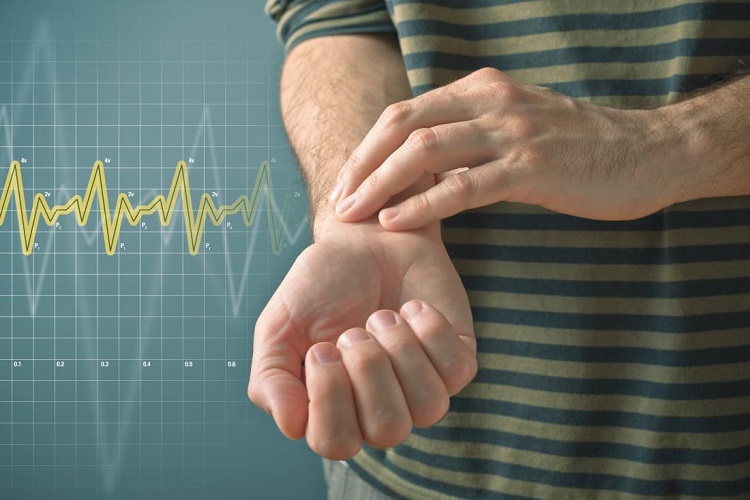
Before exercising, you should endeavor to check your heart rate. Typically, a heart rate of over 100 beats per minute (bmp) is too high for adults.
Exercising with a heart rate that is too high is dangerous because it is an indication that you are going above your maximum heart rate.
Here’s a quick way to determine your ideal maximum heart rate. Subtract your age from 220 bpm to get your maximum heart rate.
For example, subtract 40 from 220 if you are 40 years old. Your maximum heart rate is 180 bpm.
If your heart rate during a workout is above whatever your answer is, you are definitely putting yourself at risk.
In case you experience irregular heartbeats (palpitations), chest pain, or shortness of breath, you should seek medical attention immediately.
Exercising in those conditions may lead to very dangerous heart issues or even a heart attack.
You shouldn't go beyond your target heart rate range when doing exercises. This should be around 60 to 80 percent of your maximum heart rate. This will put you in a safe zone during your training sessions.
Before starting any form of strenuous exercise plan or routine, it is always wise to consult your doctor.
Also, if you have any health challenges (such as being diabetic or if you have any heart problems), don't hesitate to seek medical advice before starting a workout program.
Exercising With Optimal Heart Rate

An optimal heart rate during exercises will increase as your workouts increase. There will be proper circulation of blood to your muscles. Also, oxygen and nutrients are circulated adequately to keep your entire body functioning well.
The optimal heart rate when working out depends on the individual since it can be influenced by a few different factors such as:
- Fitness condition: A runner or athletic person usually has a lower resting heart rate than non-athletic people. So, the optimal heart rate will vary depending on your current fitness level.
- Air temperature: Sometimes, heat and humidity can increase your heart rate.
- Use of medications: Some medications like beta-blockers can slow your heart rate. Conversely, a high dose of thyroid medication can increase your heart rate.
- Stress: Stress can trigger some emotions that can either quicken your heart rate or slow it down.
- Age: Your age also determines your average heart rate when exercising. To figure out your optimal heart rate, you should use the formula mentioned above (subtracting your age from 220 bpm).
How to Calculate a Perfect Heart Rate

A perfect heart rate is determined by the number of heartbeats per minute (bpm) during your highest workout.
However, you should be reaching your target heart rate of around 60 to 80 percent. Keep in mind that range gradually lowers as you age.
To calculate your perfect heart rate, you need to go one step further after subtracting your age from 220 bpm. Multiply the result by 0.60 and by 0.80. This will help you to find the low and high ends of your range.
When this formula is used for a 40-year old, you will get a target range of 108 to 144 bpm. This is a healthy range for exercising for a 40-year old person.
A better way to improve your heart strength and protect it from heart attack is by increasing your heart rate during your workouts. Regularly doing plenty of exercises will keep you in perfect physical shape.
Conclusion
You can attain your fitness goals safely by knowing what’s a good heart rate when exercising. Your heart rate when exercising will depend on a few different factors like your age and fitness level.
Basically, your heart rate during your workouts should be at a range of about 60 to 80 percent of your maximum heart rate.
In any case, when you plan on starting an exercise routine, you should see a specialist to guide you on how to go about it.
Resources: