
Do you experience lower back pain and want an exercise to solve the problem?
The Romanian dumbbell deadlift is an effective exercise to build strength in the glutes and hamstrings. It is an excellent way to build the lower body, such as the legs.
While several exercises are available to train the legs, most athletic coaches and physical therapists love the Romanian dumbbell deadlift. This is because of its low equipment requirement, relative ease of use, and training effectiveness.
Learning proper dumbbell Romanian deadlift form is easy with step-by-step instructions and tips. It is an excellent lower body compound exercise for both athletes and casual gym-goers as it can improve the utilization of form other exercises.
This article describes the Romanian deadlift with dumbbells with full instructions on how to perform the weight lifting move.
What is a Romanian Deadlift?
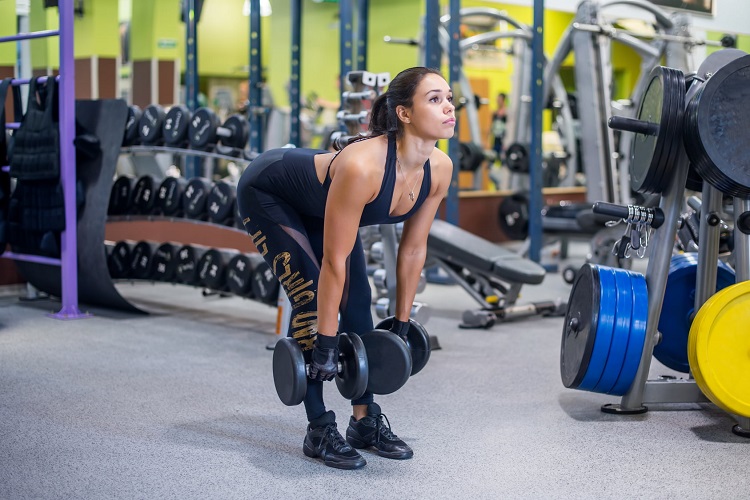
The Romanian deadlift is a functional compound strength movement used to develop the strength of posterior chain muscles. It is the perfect weight lift for developing the gluteus maximus, hamstring, and adductors.
You perform this posterior chain compound exercise by holding a pair of dumbbells in both hands. It functions as an accessory list with a submaximal load.
Therefore, it differs slightly from the traditional deadlift, though both movements increase strength and muscle hypertrophy in the posterior chain muscles. The Romanian deadlift emphasizes and targets the hamstrings as opposed to the glutes.
The primary muscles involved are the posterior chain muscles, such as the gluteus maximus, hamstrings, erector spinae, and trapezius.
Anyone with hip mobility issues can use the Romanian deadlift because the hips usually sit high. It is an exercise for those with an intermediate level of physical fitness and exercise experience.
The range of motion when performing a Romanian deadlift depends on your mobility and ability to maintain a neutral spine. This move strengthens and rehabilitates various muscle groups along the posterior chain. It targets the buttocks, legs, and the back of the torso.
The difference between a conventional deadlift and a Romanian deadlift is that your hips don't go as far down when performing a Romanian deadlift move.
This is important because it loads the hamstrings more and suits people with stronger quadriceps than hamstring muscles. Instead, this workout focuses most of the physical work from the muscles responsible for extending the hip and the knee from the posterior.
The Romanian deadlift exercise balances two muscle groups. It targets many muscle groups at one time, which is considered a functional movement that translates to other areas of life. A greater balance between the hamstring and quadriceps muscles shows better running performance.
Different dumbbell Romanian deadlift variations require different equipment. For example, the barbell variation allows for heavier loading than with dumbbells.
A Romanian deadlift exercise with dumbbells can deliver maximum muscle strength and development when performed properly.
Benefits of Doing Romanian Deadlift with Dumbbells
Dumbbell Romanian deadlifts target the glutes and hamstrings compared to a conventional deadlift exercise. The stiff-legged nature of this exercise places more emphasis on your hip hinge and less stress on the quadriceps.
It is like the conventional deadlift because the Romanian deadlift works your posterior chain, including the glute and hamstring,
It is a compound movement you can include in your full-body training routine to strengthen the posterior chain muscles.
The exercise engages the muscles in the back of your body that other exercises don't always hit. It also involves core engagement, allowing me to build strength and stability.
Performing a Romanian deadlift with dumbbells improves hip mobility, hamstring flexibility, and muscular imbalances.
It teaches the body to hinge with load and coordinate spinal movement and motor control skills. Hence, perform this exercise if you want to get and stay strong.
Including dumbbells in the exercise provides a great alternative to using barbells. It provides a unique challenge for the core stabilizers, helping to develop a muscular forearm and grip strength.
This is because you need more work to keep the dumbbells in place and hold them in position throughout the execution.
You can use this workout move to identify and fix any common muscle imbalances. It stretches and engages the hamstring and lower back to greater than other lower body exercises.
Athletes love this exercise because it prepares the back for positioning other than strengthening. You will gain some incidental strength while improving bracing for cleans and snatches.
Unlike other low body compound exercises like my squat, a Romanian deadlift focuses primarily on the hamstrings and not the quadriceps. It makes a great exercise for the lower back because it keeps the lumbar spine arched.
Performing single-leg Romanian deadlift can reduce back injuries because the weight is half of the bilateral options.
As you strengthen your hamstrings and glutes, you'll find these strength gains translate to other exercises. For example, you'll be able to lift more comfortably when you go through your traditional strength training routine.
How to Perform Romanian Deadlift with Dumbbells
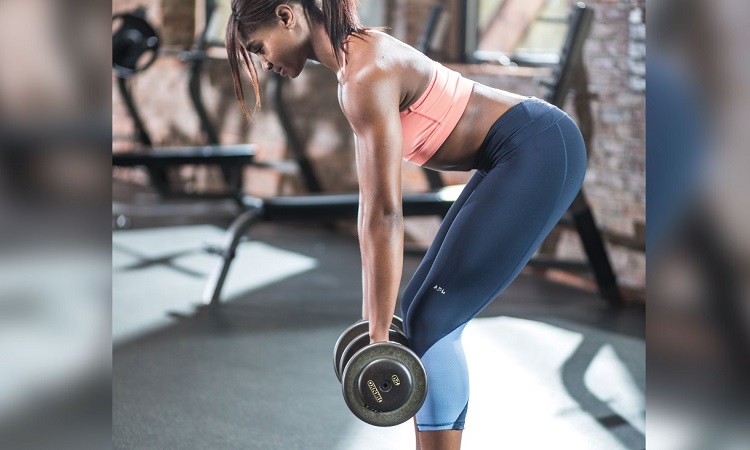
Learning how to perform a Romanian deadlift with dumbbells effectively is simple, especially if you've performed the conventional deadlift before.
You start with the dumbbells on the floor in front of you and perform several repetitions. Here are the steps you can follow to learn how to perform the deadlift move.
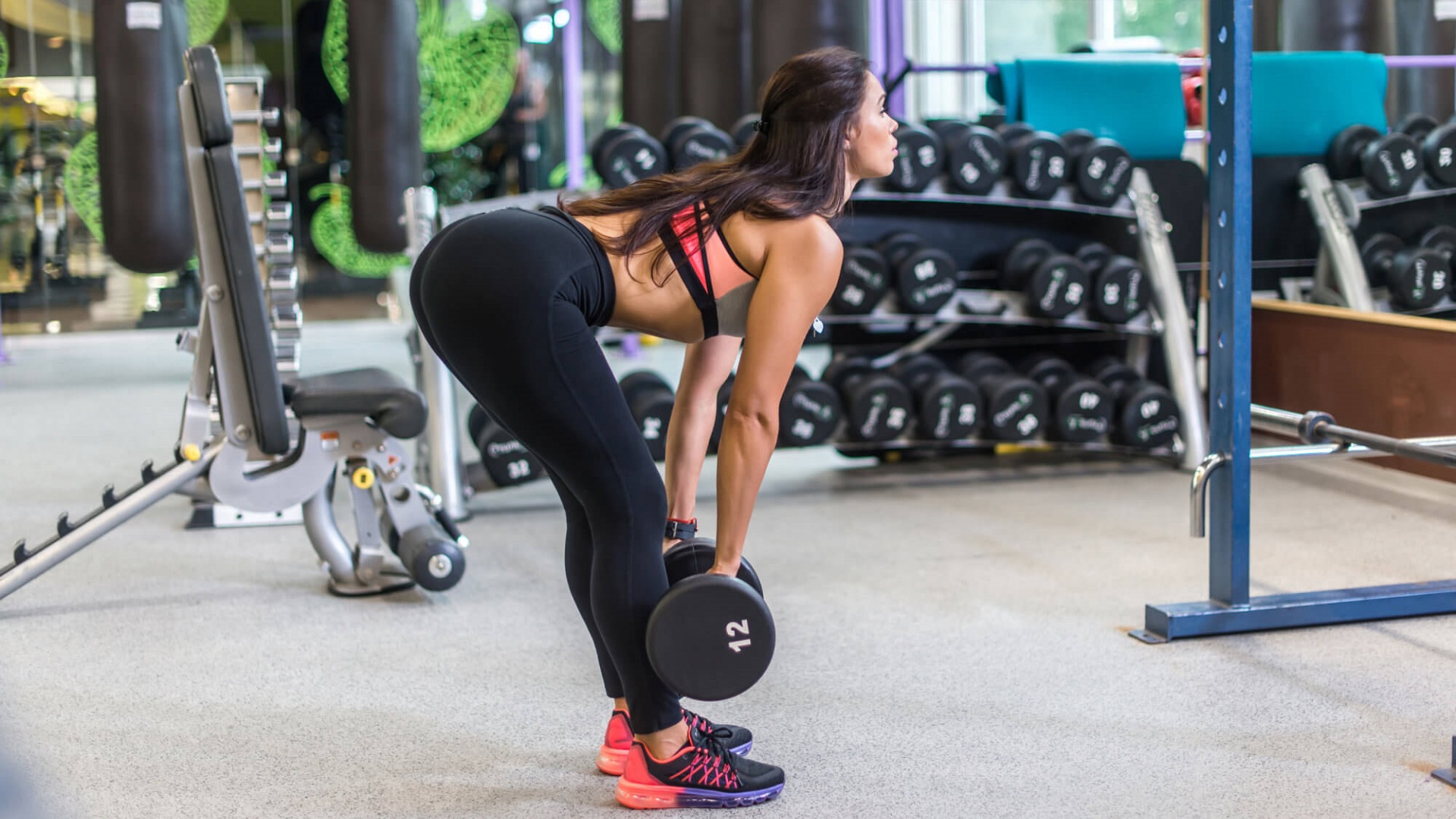
- Start with feet shoulder-width apart. Grab a pair of dumbbells and place them in front of the body or at your side.
- Ensure the weight is evenly distributed within your feet. Stand tall, pull your shoulder blades back, inhale, and brace your abs.
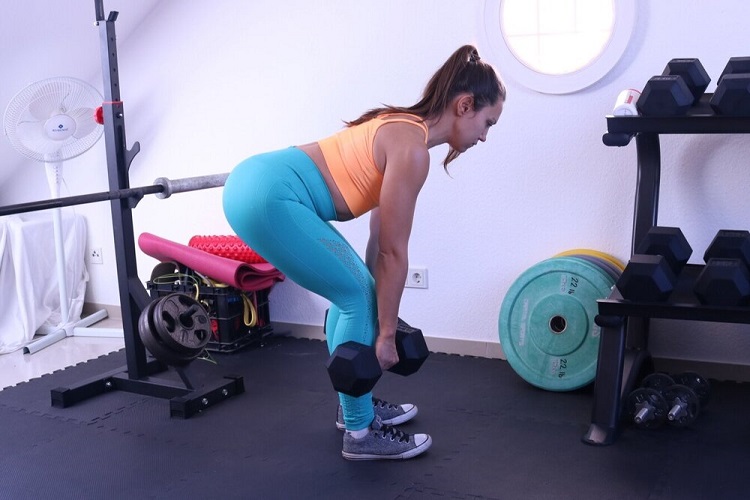
- Begin the Romanian deadlifts move by pushing her hips back and hinging forward until the dumbbell is just below knee height.
- Slowly descend forward with your torso and push your hips back. Maintain a straight line on the spine and keep your chest proud throughout.
- As you descend, ensure your shoulders are over the top of the dumbbells. Keep the dumbbells close to your body and slide them down to shin level close to your center of gravity. When the dumbbells pass the knees, don't allow the hips to sink further.
- Lower the dumbbell until you feel a stretch in the hamstrings. Make sure your knees remain slightly bent to avoid locking them out.
- Exhale as you descend into triple extension or upright position and ensure you contract your glute muscles
- Complete your set and replace the dumbbell carefully on the rack
You can hold the dumbbells in front of the quadriceps or parallel to your feet. When performing this exercise, every rep starts at the top and not from the floor, and it ends at the top before you put the dumbbell back in the rack.
Safety Tips
The Romanian deadlift is not a dangerous exercise but can cause injuries and mishaps. Proper form is the most important thing when performing a Romanian dumbbell deadlift.
Because of how high the hips are during the movement, you may not lower the weight as far down as possible in your conventional deadlift. When performing a Romanian deadlift, the important thing to consider is starting the hips' movement. As you press your hips back, your knees should not simultaneously bend as this is not a squat.
Start the workout with a warm-up set. A warm-up plays a crucial role in any exercise, which applies to compound lifts like the Romanian deadlift. Start your home warm-up set with an empty straight bar and focus on the proper form.
If you're new to deadlifting, start with light weights until you feel comfortable with the movement. You can then progressively increase the load. Often, people use the Romanian deadlift to learn the proper movement pattern before trying with dumbbells.
Make sure you execute the hip hinge correctly because it reduces your risk of injury and can translate to your other lifts. Sometimes, excessive flexion or extension of their spine when performing the Romanian deadlift can cause injury and muscular imbalance.
The safety measures include distributing weight evenly throughout the midfoot and keeping the shoulders down and back. You also need to maintain a neutral spine without locking out the knees.
You don't use the full range of motion when performing Romanian deadlifts compared to a traditional deadlift. Therefore, it can compromise your lower back, putting you at risk of injury.
Ensure the elbows stay locked out for safety measures and avoid actively flexing the triceps. Perform the movement slowly and with control. Don't compromise form for distance traveled just because you have limited mobility in your hamstrings.
Conclusion
Romanian deadlifts are important full-body exercises to your strength training workout program.
The exercise tones and defines your muscles while rectifying any misalignment, thus benefiting your overall posture. This exercise has many applications in strength training and high-intensity, functional training programs.
Adding dumbbells to a Romanian deadlift is an effective way to improve your total body strength development. However, this exercise can make you develop some bad habits.
Resources: