
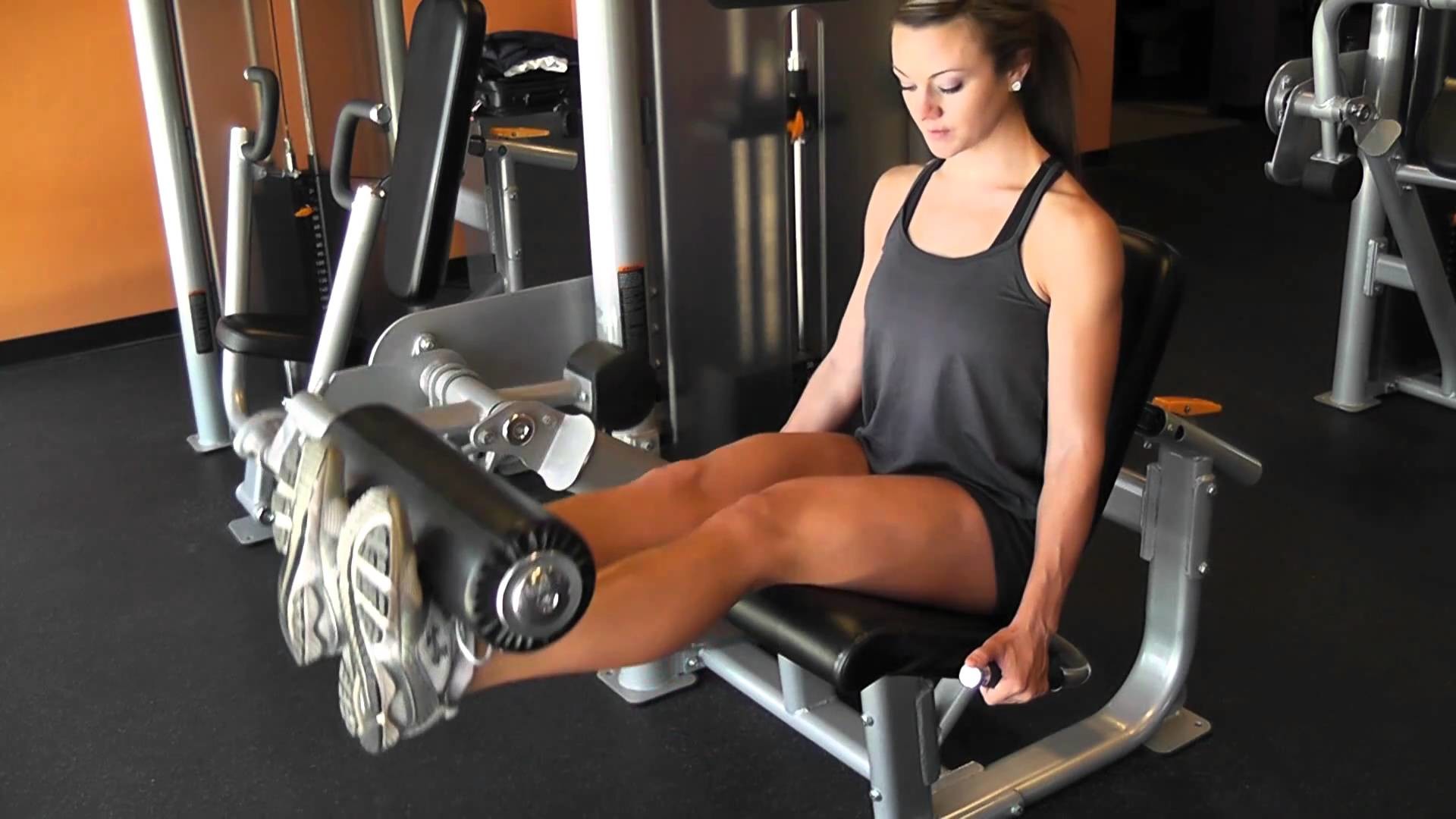
The leg extension is a classic exercise performed using a leg extension machine in the gym. It is a strength training exercise to strengthen your quadriceps or the muscles in front of your upper legs.
This is a tried-and-tested isolation exercise for leg growth and is ideal if you want to focus on your quads.
However, it is not the most practical move for improving the overall leg strength as it puts a lot of pressure on the knees, which increases the risk of injury.
Consider doing the alternative if you want to improve your overall leg strength.
There is a fantastic range of leg extension alternatives that can produce more effective results in building specific muscles in your legs. You can use these exercises as warm-ups for leg extensions performed on a weight machine.
They can help you avoid any severe knee injuries.
This article has highlighted some of the best leg extension alternatives you can try for your leg workout.
How Does Leg Extension Exercise Work?
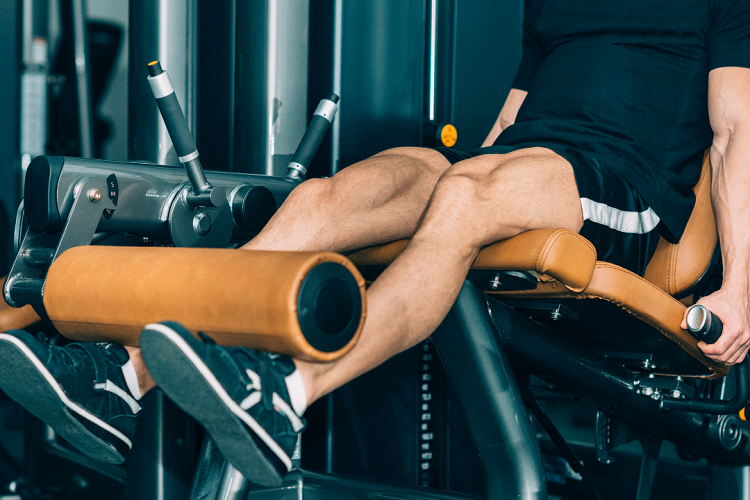
The key muscles you'll use in a leg extension are the quadriceps. Leg extension alternatives in range more muscles such as the hamstrings and glutes. Some exercises may work your core, which is important for balance and good posture.
These alternatives offer a more functional workout than doing leg extensions on a machine. They also reduce the risk of injury as they're less stressful on the knees.
These exercises involve extending lower legs by bending at the knees to lift the desired weight set on the machine. It targets your quadriceps, allowing you to build strong quads or the muscles in front of your thighs.
You sit on the machine with a weighted pad on top of your lower legs, then use your quads to extend your knees and lift your lower legs repeatedly.
Despite being incredibly useful for building power and strength in the quadriceps, leg extension it's not as effective at targeting anywhere else. Also, anyone with knee injuries or weak knee joints cannot perform the long leg extensions.
The exercise can cause significant damage to the kneecap and the important anterior cruciate ligament. It is also not convenient because you need a special machine to use.
Fortunately, several alternative exercises allow you to perform leg extensions without using machines. These alternatives don't cause as much damage to the knees and can target other lower body muscles.
You can use a pull assist band to add more resistance to the exercises and intentionally work your leg muscles without the stress of a weight machine on your needs.
Target a broader range of muscle groupings to build a more powerful trunk with less risk of injury in the process.
The Best Leg Extension Alternatives
The best leg extension alternative is less stressful on your joints and produces more effective results in building specific muscles in your legs. Instead of leg extension, you can use these exercises to create a productive leg day routine.
Some people use these exercises as warm-ups for leg extensions performed on a weight machine. It is better to executive each exercise for a minimum of three sets of eight repetitions.
Keep reading to learn the best leg extension alternative exercise you can try from the comfort of your home.
As your legs become stronger, you increase the number of repetitions.
#1 Weighted Bulgarian split squats with resistance band
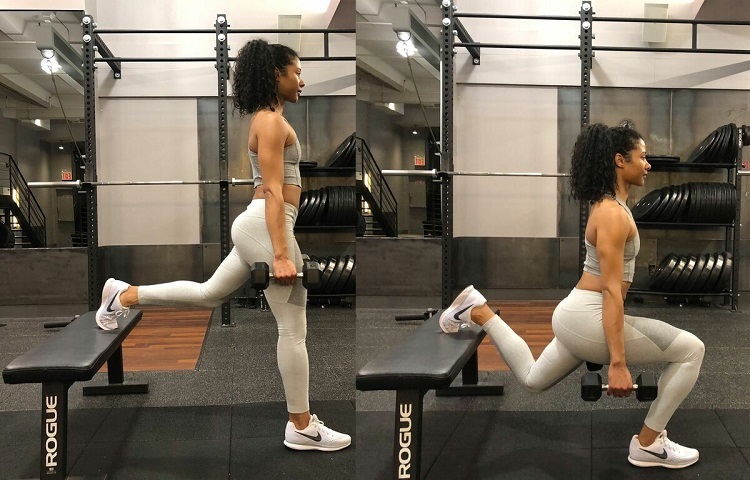
Use this leg extension alternative to target your quads, calves, and hamstrings. It's a single-leg squat move that will help build quads of steel. This extension is one of the best for building huge quads and a more well-rounded exercise.
It strengthens the muscles of the legs, including the quads, hamstrings, glutes and calves. As a single-leg exercise, the Bulgarian split-squad forces your core to work in overdrive to maintain your balance.
You only need a bench and a few dumbbells to perform this leg extension alternative.
How to perform
- With your feet shoulder-width apart, stand in front of a bench or any other raised platform
- Stand firmly on one end of a resistance band and loop the other end of the band over your shoulders
- Raise your other end and place your foot behind so it's resting on the bench
- Bend your forward-facing knee until your thigh is parallel to the floor
- Simultaneously bend your back knee until it rests against the floor, with your back foot braced on the bench
- Return to the start position and repeat
- Alternate your legs after the desired number of repetitions
#2 Standing leg extensions
The exercise strengthens your core and quad, offering similar benefits to leg extensions on a machine. It also challenges your balance and coordination by working each leg independently.
The extensions are the perfect quad-targeting exercise for leg day when done with proper form and technique. Your ability to perform this exercise unassisted helps with balance training. You can add ankle weights to the foot you lift to make it harder.
How to do it
- Place your feet hip-width apart while keeping your shoulders away from your ears.
- Engage your core by raising your right foot 1or 2 inches off the floor
- Raise your right knee, bringing your thigh to a 45-degree angle
- Bend your right knee to send your right foot back
- Straighten your right knee to extend your leg in front of you
- Start with two sets of 10 repetitions and then repeat with the left leg
#3 Cyclist squat
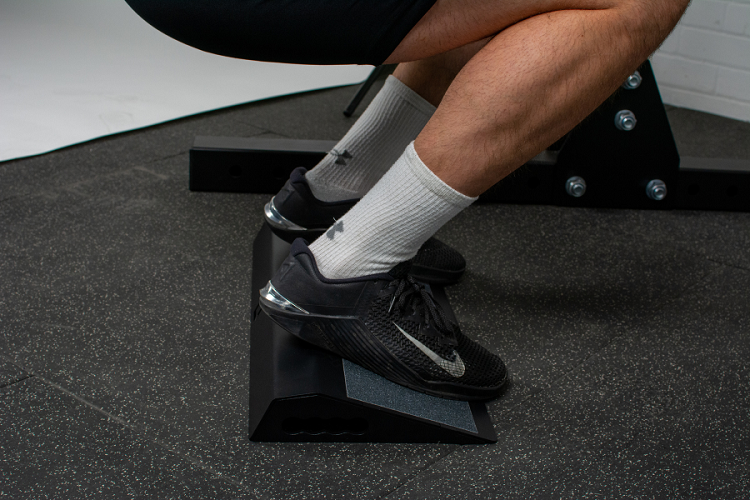
This alternative leg extension exercise can help build healthy knees and work your lower leg muscles. It is a killer quad exercise that will develop the muscles, much like the extended cycling sessions.
The squat works all the major muscles in the legs, including the hamstring, quads, hips and knees, to increase flexibility. You can use the cyclist squat as a great introduction to a proper squat pattern.
If you want to make the exercise more difficult, place a resistant band under your feet or lift a weighted barbell over your head.
How to perform
- Standing with your feet together, loop the resistance band on both feet while holding the excess in both hands
- Perform a squat
- Keeping your back straight, bend both legs simultaneously until your knees are over the top of your shoes
- Hold the position, then push back up through the floor to return to the start position
- Repeat these steps for the desired number of repetitions
#4 Resistance band squats
Squatting with resistance bands is a convenient way to build muscles and strength. Squats are popular exercises that target the glutes and surrounding muscles.
Using resistance bands can give you an additional challenge to make squat exercises more effective.
The resistance bands also help control the squat movement from start to finish. They assist when you lower into a squat and rise to a stand position.
How to perform
- Stand with your feet slightly more than hip-width apart with a loop band just above your knees.
- Slowly push your hips back into a sitting position while bending your knees.
- Continue to lower yourself until the thighs are parallel to the floor. Ensure your knees are at a 90-degree angle. Hold the position for 2 to 3 seconds, then slowly lift back into the starting position.
- Perform 8 to 12 repetitions
#5 Seated leg extension
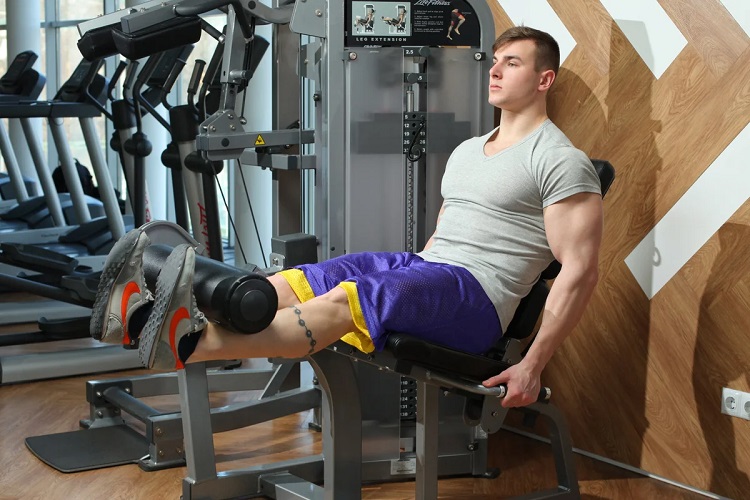
You can perform the seated leg extensions with a lever machine. Start by sitting on a padded seat and raise a padded bar with your legs.
Performing this exercise will improve your overall leg strength by engaging more leg muscles like the glutes and hamstring.
It also strengthens the quadriceps muscles on the front of your thighs. The exercise also works your core, which is important for good posture and balance. You can select an appropriate resistance by setting the pin in the weight stack.
How to perform
- Start seated in a chair, feet flat in front of you, palms grasping chair edge at sides of the front
- Adjust the height of your ankle pad tourist against the front of your ankles
- Keep your back held firmly against a chair and your legs at a right angle to the floor
- Raise your left foot from the floor and extend your leg ahead of you
- Return your foot to the start position and repeat for at least eight reps
- Change legs and repeat
#6 Weighted step-ups
This is another excellent exercise for the lower body that can improve your mobility. It is a solid and easy movement to perform that requires a pair of dumbbells and a bench.
The step-up is a resistance exercise that works muscles in the legs, targeting the quadriceps, glutes, and hamstrings.
They are a good lower body conditioning exercise that increases the load on the muscles. As well as improving your stair-climbing game, the steps-ups will improve your strength and resilience for sports like cycling and running.
You can also perform this leg extension alternative as a bodyweight movement if you don't access weights.
How to perform
- Stand in front of a bench with your legs shoulder-width apart.
- Keeping your hands firmly held on your hips, raise your left foot and place it firmly on the bench with your knee at a right angle.
- Raise your right foot off the ground and stand with both feet firmly on the bench
- Return your left foot to the ground, followed by your right foot
- Repeat this exercise but lead with your right foot first
- You can alternate these steps using your left and right feet for the desire to several repetitions.
#7 Reverse lunge with resistance band
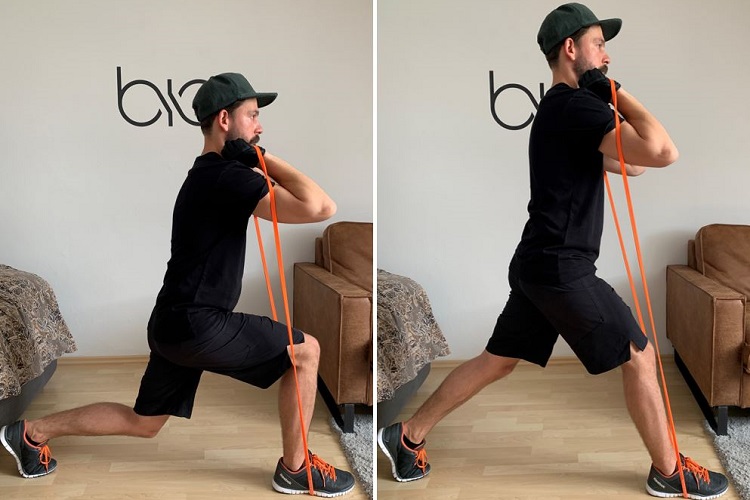
The reverse lunge is a bodyweight movement that targets the glutes. It is a fantastic leg extension alternative for strengthening the quad muscles while also hitting the glutes and hamstrings simultaneously.
Lunges challenge many muscles in your lower body, including the glutes, hamstring, quads and calves. Performing this exercise with a resistance band puts less stress on the knee by keeping the front leg immobile.
For example, adding a resistance band allows more core activation while increasing potential quad gains. The exercise is more beginner-friendly than the forward lunges and is easier to do in a controlled manner.
How to perform
- Start with your feet shoulder-width apart
- Step one foot back and lower yourself into a one-legged squat
- Place a resistance band beneath your right foot and loop the other end over your shoulder.
- Keep your right foot planted forward and take a step back with your left foot
- Lower your right knee to the ground, raise and return your right knee to the start position
- Repeat the steps for at least eight repetitions, then switch to your other leg
#8 Side lunges
This lunge and leg extension exercise can build stronger hips, quads, and glutes. It is a great exercise because it works the glute's sides, an important stabilizer muscle for the hip joint.
Performing this exercise will help you build strength and stability in each leg individually and improve your balance.
It develops balance, stability and strength by training your body to move side to side. This exercise works your inner and outer thighs and may help reduce the appearance of cellulite.
You can make this exercise difficult by holding weights in either hand or looping a resistance band under one foot and over your shoulders.
How to perform
- Stand on your feet loosely apart. Face your toes forward and keep your hands together or straight ahead.
- Raise your right foot and take an enormous step to your right-hand side.
- Bend both knees and lower yourself into the squat position as you step across.
- Return to the start position and repeat it on your left-hand side.
- Repeat this exercise in either direction
Conclusion
The leg extension exercises require a weight machine. However, you can try other alternatives at home using a few resistance bands and the motivation to build stronger legs.
These alternatives are easy to perform at home and don't require using a leg extension machine.
These great exercises will help build a more muscular lower body and improve your strength and fitness. We recommend executing each exercise for a minimum of three sets of 8 reps. Practice these leg tensions at home by creating a full leg day workout.
Remember to warm up with some stretching and light cardio before commencing any intense workouts.
Resources: