
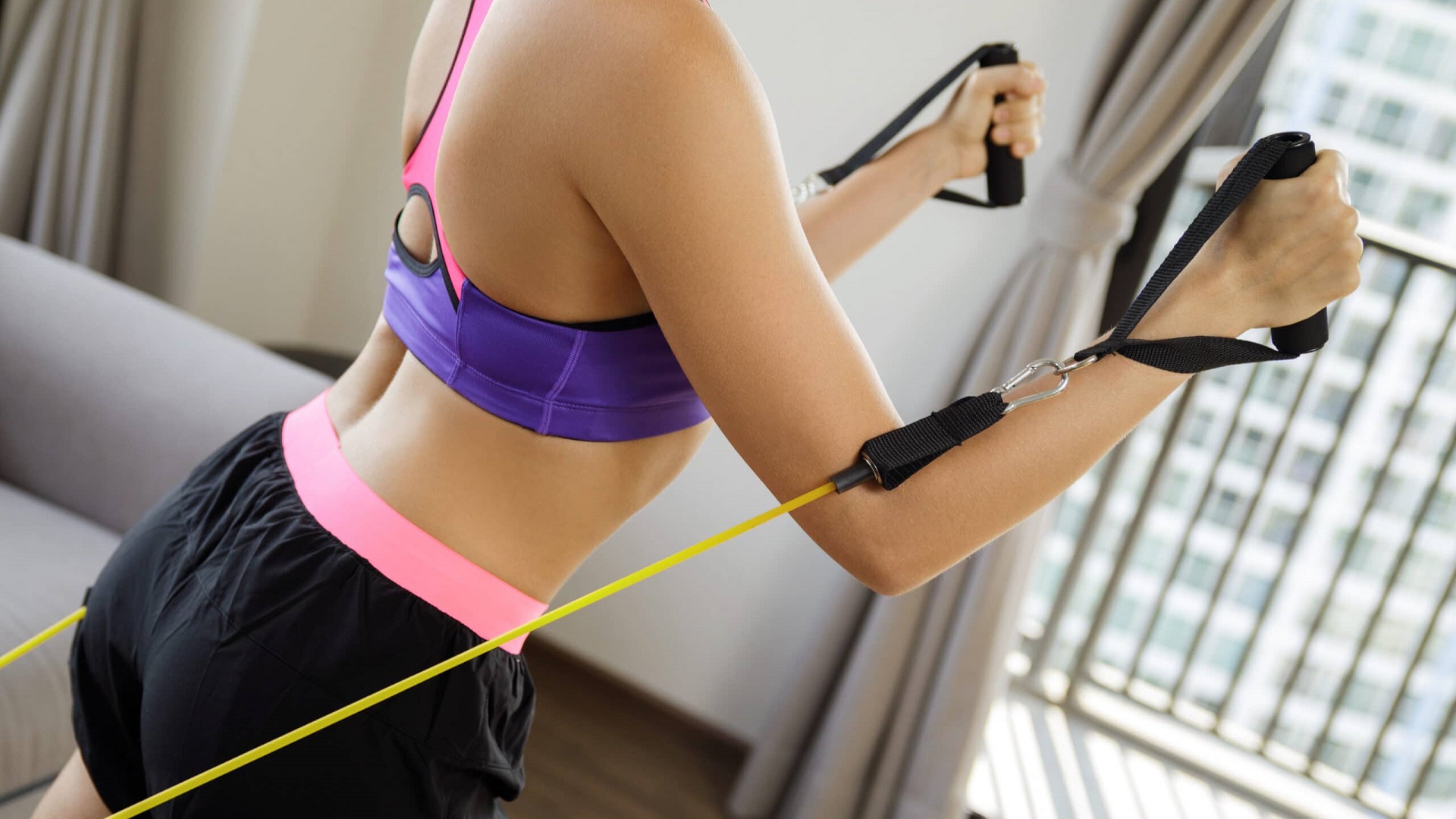
Working out your back can be an enormous pain (if you do it incorrectly). Done well, and you’ll see back gains unlike anyone else in the gym.
Using resistance bands can help you practice proper form, incite slight resistance in key areas and untouched muscle groups, and achieve a bulkier, stronger back.
These workouts can be handled at the beginner level. Resistance bands, and our guide on them, show that anyone can use resistance bands effectively—these exercises range from beginner to intermediate, but there’s no barrier to entry other than yourself and your experience. Let’s take a look at the best back workouts with resistance bands.
#1 Assisted Pull Ups
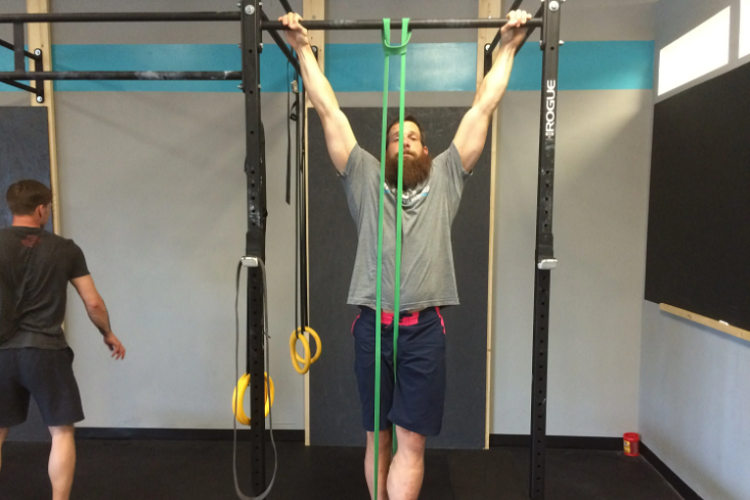
The first and most powerful way to train your back with resistance bands is by doing the old-fashioned, tried-and-true exercise: pull-ups.
They help your back immensely and come with enough benefits to also affect other parts of the body and build up your muscles.
It’s hard to train your lower back, but assisted pull-ups help just about every region of your back and will absolutely help with posture correction in the process.
- Approach a hanging bar that can support your weight, and place a resistance band over the top so that it loops securely and hangs down
- Put one foot into the loop and grab the bar wider than your shoulders are set apart to give yourself leverage
- Wrap your other foot around the ankle of your foot that is in the loop
- Pull up and allow the retraction of the band to help pull you up, all while focusing on your arms and back
- Engage your core as you go through these exercises: it’s important to make sure that you’re keeping proper posture the whole way through
- Repeat about ten to twenty times, then switch which foot is in the loop so you don’t put all the weight and pressure on one leg
#2 Lateral Pulldown
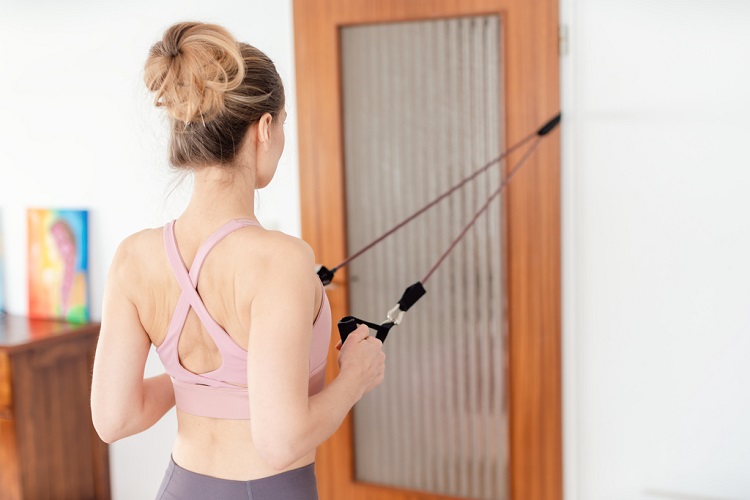
This is a simple-enough exercise that you can do at just about any fitness level. This not only helps your back by training you to keep it straight, but it engages muscles all along your upper back to help with posture and correcting issues with your muscles.
A lateral pulldown isn’t the craziest thing you’ll do with resistance bands, but they are a great fitness gateway exercise that teaches you just what your resistance bands can do.
- Secure your resistance band to a bar or fixture that’s above your head; you want a good amount of clearance for this to work
- Place your feet as far apart as your shoulders are and keep them in a tight stance
- Engage your core, and grab onto each end of the resistance band and pull down
- Bring your arms above your head and keep your back nice and straight; you will feel the engagement of your back and core throughout this process
- Pull the band straight down; do not do it at a 45° angle movement, bringing your arms down by your side as you work through this exercise
- Release your hold and repeat as often as possible, focusing on form over everything else, otherwise you won’t engage your back properly
#3 Pullovers
You can use your environment to your advantage, as you’ll find out with a lot of resistance band-ready content on the internet, from videos to articles just like there.
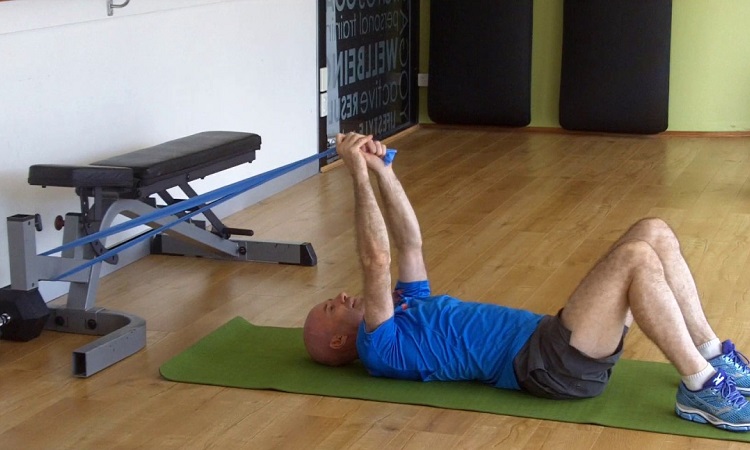
You can use an anchor in your environment to help you with pullovers, a roundabout way of lifting your arms from your head down to your abdomen instead of in reverse (being to your abdomen, then to the starting position).
These work extremely well for your arms and are moderately effective for your back. Add them to your repertoire, just don’t make them the main focus. Stronger arms mean that you can handle more resistance for your back; it all comes full circle.
- Secure your band to a horizontal obstacle, something like a weighted machine, support beam, or something similar
- Lay on your back with your knees raised, and lift your arms over your head (horizontally) to grab onto the resistance band
- Engage your back and core, and begin to pull the resistance band overhead
- You want to pull from the floor to an arc that goes over your head, bringing your hands down by your hips on to the floor, and then releasing in a similar arc fashion
- Repeat as often as possible and be sure to focus on the motion of your pull
#4 The Back Fly
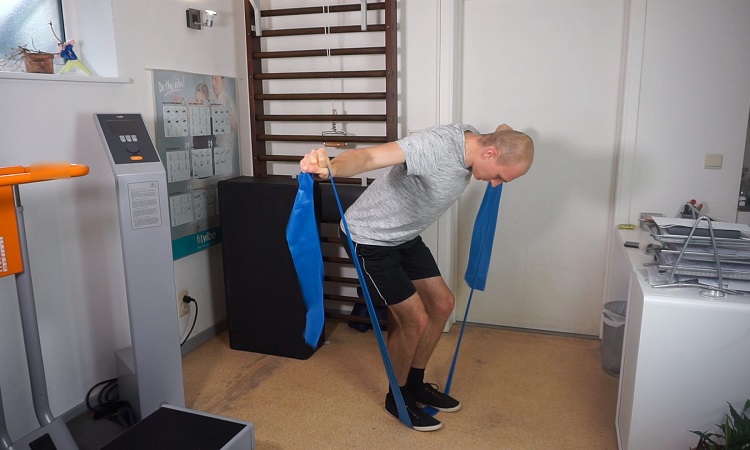
Resistance bands come in different sizes, shapes, and with different uses. It’s important that you use a single band with dual handles on either end for this exercise, and that it fits you properly for your maximum arm width.
The Back Fly is basic, but since we wanted to make sure this list had accessible exercises for anyone to do, we wanted to include it. You can see great shoulder and upper back gains with this one.
- Stand with your legs slightly further apart than your shoulders
- Grab onto each end of the resistance band; this exercise requires handles for safety
- Position your elbows so they remain at shoulder height the entire time; begin pulling your arms apart and keep those shoulders level
- With bent elbows at about a 30° angle, pull until the tension in the middle challenges your muscles; do not overstretch
- If you feel your shoulder blades engage, you are doing this correctly
- When extended, hold for 2-3 seconds and then gently release so that your muscles engage in the opposite way as well
#5 Standing Y Stretches
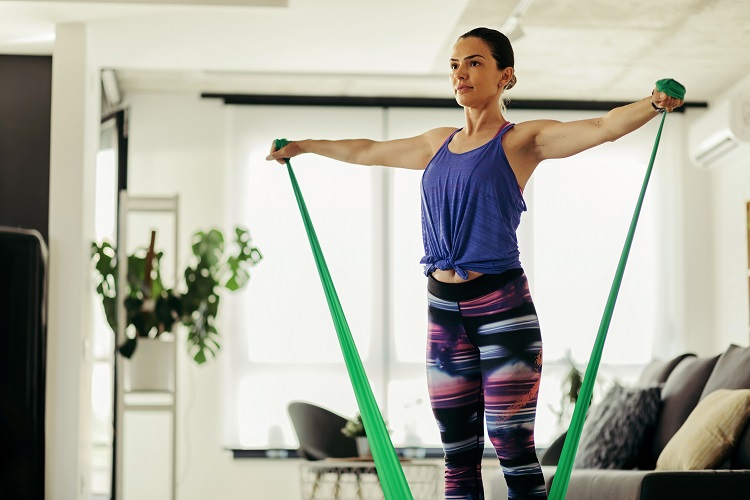
Yes, it is what it sounds like—making the letter Y appear above your head with your resistance band. It sounds super simple, but the impact that it has on your upper and middle back is seriously nothing to laugh at.
It’s a simple exercise that won’t make you completely cut, but it’ll help to trim the fat and bulk up your arms and upper back at the same time.
- Stand with your feet in the proper stance, shoulder length apart with wide placement
- Place the resistance band over both of your hands and raise your hands above your head, straight up
- Position the bands on your wrists and begin to pull your arms apart
- Once you feel tension, pull until it becomes uncomfortable so you can find your perfect point
- Keep your core engaged and back straight the entire time
- Repeat with proper form, but try to ramp up speed; this benefits your back and your arms at the same time, while minorly engaging the obliques
#6 Banded Face Pulls
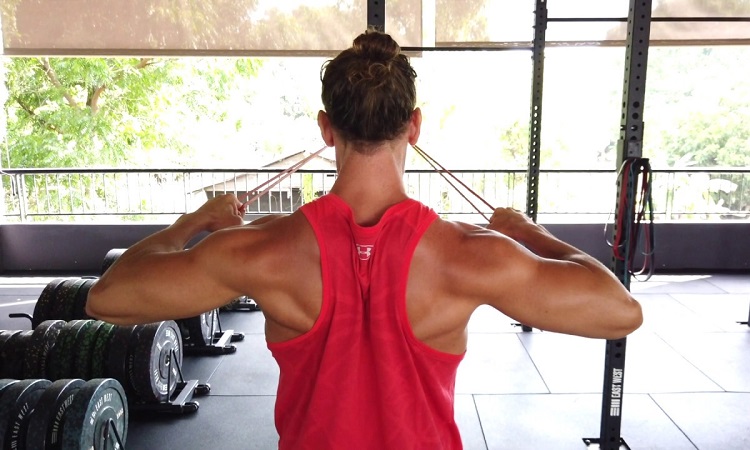
It sounds scarier than it actually is. You really want to use a high resistance band for this one, but as long as you have a metal pole, sturdy banister, or support beam that you can use, you can do a banded face pull.
Exert caution and taper-off from doing these at an advanced level for sure, but there’s no reason not to use these in the meantime and build up some serious back muscle, top to bottom.
- Wrap resistance band around a solid structure such as a support beam
- Hold the other end of the resistance band with both arms, keeping your back straight and your arms level with the resistance band; you want your arms to be horizontal (as much as is comfortable) with your elbows pointed out at a 30° angle
- Keep your feet steady and be wary in the event of a band snap, but walk backward following your arms pulling the band
- If you walk and use your body’s weight to pull the band, you won’t engage your back; be sure your back is straight the entire time for full engagement and benefit
#7 Deadlift
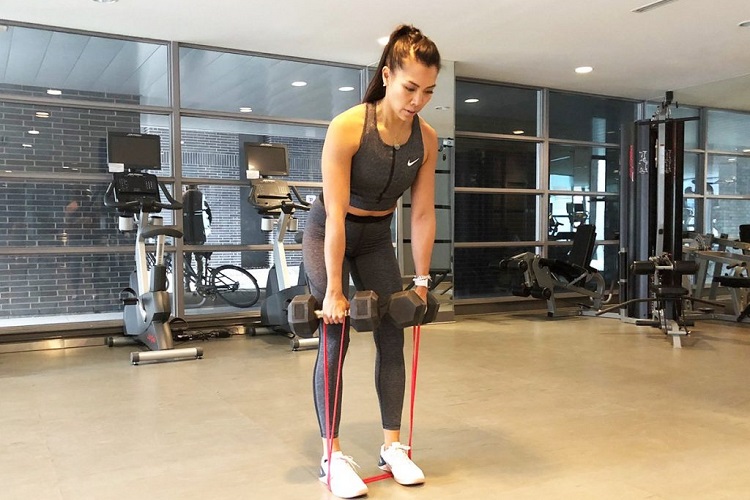
Okay, so it’s not a legitimate deadlift with a barbell, but it is following the same style.
Your resistance bands can really emulate a lot of other workout styles and exercises, and thankfully you’ll be able to incorporate a lot of these exercises into your regimen now so that you can get used to them.
These basically train you for the gym later on while giving you tons of benefits right now.
- Hold the resistance band handles in each hand and step across the two separate linens of band
- Stand up completely straight, and feel the tension of the band in your hands
- Begin to bend at the hips, and once you begin to descend, begin to bend your knees at the same time
- Lower into as comfortable of a squat position as possible, but be sure to keep your spine neutral and your neck from bending in the process
- Stand back up slowly to feel the resistance and wait 1-2 seconds, then repeat
#8 Bent Over Rows
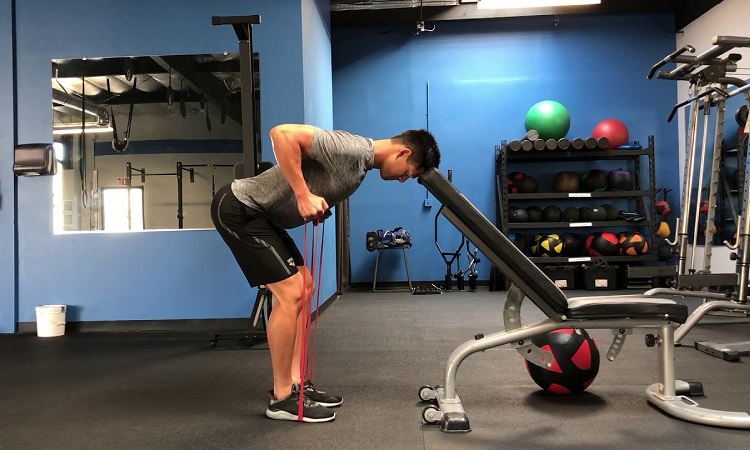
Rowing in any form is great for your body, but it’s not just for muscle gain. You can actually build your back with rowing like you wouldn’t believe, and this workout proves it. You’ll be bent over so you have to watch your lower back.
Keep your posture in a proper position and don’t overdo it. You can use this exercise to gradually increase the muscles in your lower back, and begin to work on your back to support you through tougher exercises in the future.
- Step into the loop of a large resistance band so that your feet are both on the band, pressed firmly against the floor or your mat
- Wrap the band around both of your hands and keep it nice and taut
- Lean over at your hips first, then gently bend your knees
- Using your arms only, pull the band up from the bottom to your chest, engaging and bending your elbows in the process
- Hold and then gently release after 3-5 seconds
- Breathing is key here; inhale when you pull up, exhale while you release, and keep a rhythm to your breath to maximize reps and benefits
- Repeat process while keeping neck and back completely straight
#9 Reverse Fly
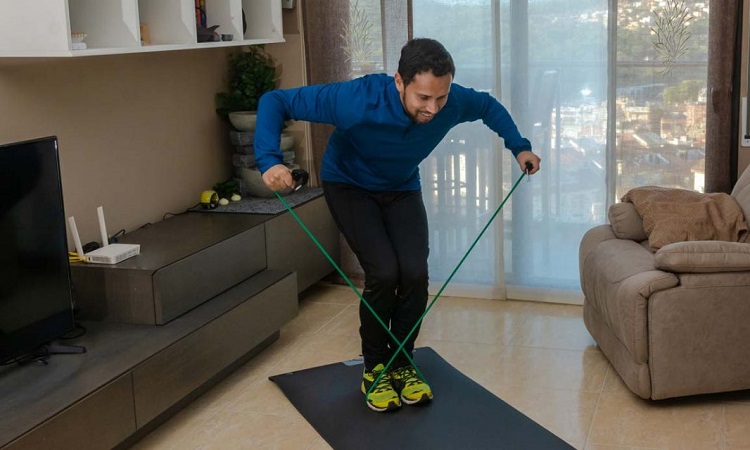
Fly exercises are seriously popular when it comes to resistance bands, and for good reason.
You can use your band to get some serious upper and middle back bulk going, as long as you have that stance locked in and know how to keep your feet on the ground when the resistance band is desperately trying to pull them up.
Quite literally, keep your feet on the ground and you’ll see the gains you’ve been trying to get.
- Stand on your resistance band (with handles on either side), then switch the handles into opposite hands so the band stretches across your feet/shoes
- Bend your hips and slightly bend your knees, keeping your neck straight and back aligned
- Pull outward and then upward to engage your shoulder blades and back, keeping your elbows gently bent to avoid overextending
- Gently release and repeat this process, focusing firstly on form, but next on speed
#10 Single Arm Rowing
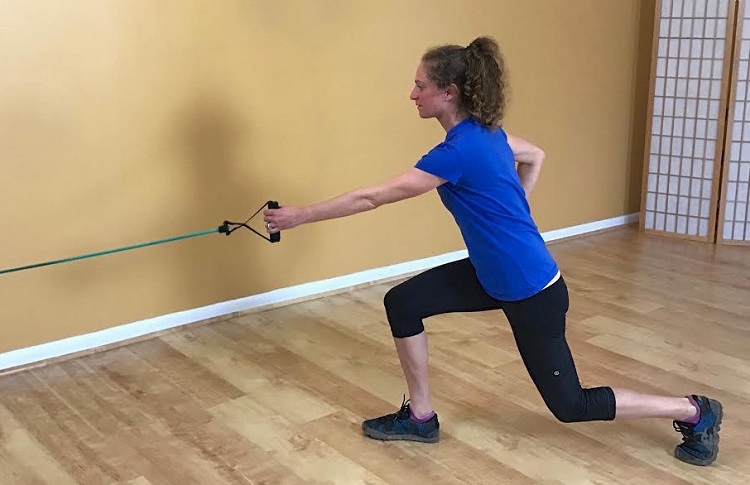
Like we talked about earlier, rowing is great for your entire back, but this rowing pattern targets your upper back and your lower back, while also getting in a bit of oblique exercise as a nice added bonus.
You have to master your stance at this point, but as long as you do that, you’re going to be sitting pretty.
You can do this at a beginner and intermediate level, although if you’re really building up those arms, this may not be the most ideal at an advanced level.
- Step on your resistance band with both feet to provide safety, grab the handle with one hand and let the other lay on the floor (you can step on it if you would like)
- Hinge at your hips while keeping your knee mostly upright
- Keep your neck and back straight while pulling up on the resistance band; your free hand should be on your hip to maintain balance
- Pull up without losing your back and neck position; repeat this for as many reps as desired
- Repeat the same steps in a mirrored fashion for your other side/arm
- Breathing is key to repetition; try to see how many rows you can do
Resources: