

Cardio exercises help the cardiovascular system. It gets your blood flowing, your heart pumping, and can be attributed to lowering your risk factors for numerous diseases and issues.
If only your knees weren’t what they are, right?
Bad joints—whether they’re stiff, previously injured, or you suffer from an autoimmune disease—can completely bottleneck you from enjoying the benefits of cardio exercise and building good habits through it.
These exercises are designed to help you live your best life while enduring the struggles of having bad knees.
#1 Swimming Exercises

Hands-down and without a doubt, swimming is the best exercise for your knees and other joints. Swimming is unique in the way that it trains all the muscle groups of your body while having nearly zero impact on your joints.
Even if you aren’t holding your breath underwater, swimming can also help with lung capacity.
All the pressure from the water acts as resistance at every single point of your body, so no matter how you move, you’re moving against the resistance of the water and building muscles in that area.
That means even breathing while your torso is submerged underwater is improving your lung capacity.
Swimming can help you burn up to 600 calories per hour for certain strokes like freestyle and butterfly strokes, so spending an hour in the pool four days per week can nearly help you lose a pound solely from exercising. No impact, no problem.
#2 Rowing
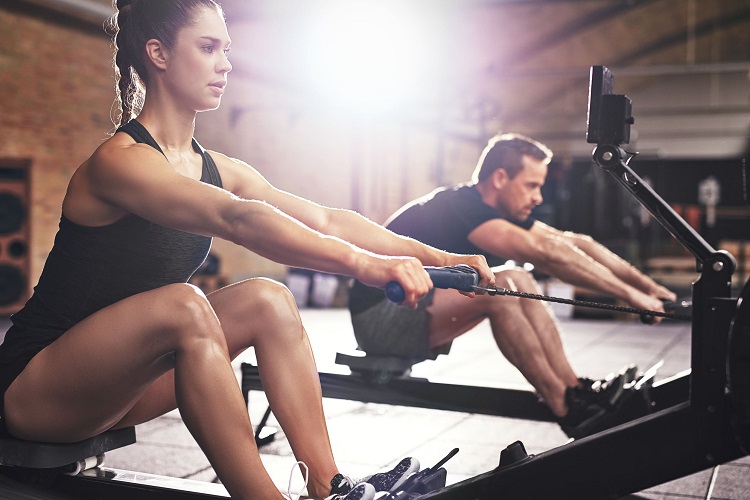
Rowing machines have become insanely popular in recent years due to the fact that they’re excellent full-body exercises that you can do at home without having to buy a bunch of other machines.
In fact, rowing engages about 86% of all muscles in the body, so you can tone muscles all over your body every single day without having to visit other machines or spend thousands on home gym equipment.
Rowing is relatively low-impact on your knees and other joints, although you will feel it in your shoulders the next day (in a good way).
You’re supposed to move with your arms more than your legs, so your knees aren’t enduring much of an impact at all. However, you can accidentally engage your knees too much and you will feel it.
Just be sure to use proper form, so you don’t harm your joints. Rowing can be great as a means of losing weight, building shoulder, leg, and arm muscle, and improving your overall health.
#3 Cycling (Spin Bike)
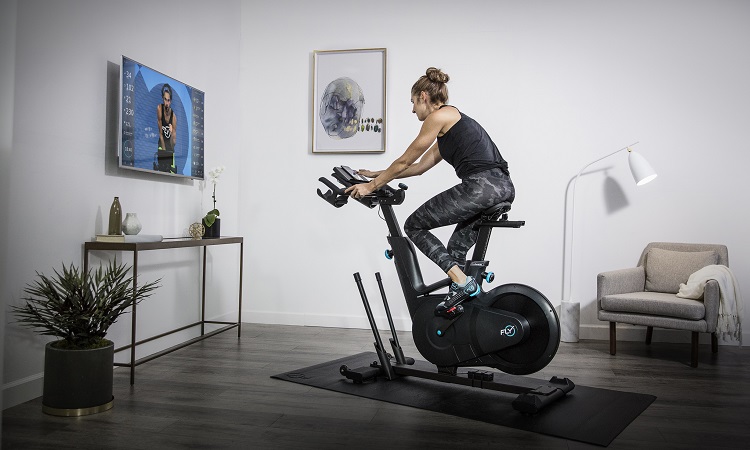
Cycling is a good way to lose weight, but riding a mountain bike or street bike can have tons of impact and vibration that run through your knees and other joints.
Stationary cycling may not be as exciting, but it gets the job done and doesn’t cost you as much stress on your joints. It’s not zero-impact, but it’s certainly better for you than the majority of exercises.
Spin bikes are the best way to cycle indoors. Your buttocks stay planted, your knees move, but the angle at which they move doesn’t put a lot of impact on your knees at all.
Apart from that, stationary cycling is a great way to strengthen your joints over time to reduce current knee pain.
Using a spin bike is the best option because of the angle and intensity.
You’re getting a full workout and burning 250-500 calories per hour (depending on resistance and the speed you choose), so you can lose weight, put less weight and pressure on your knees, and help your joints for the future, all at the same time.
#4 Ellipticals
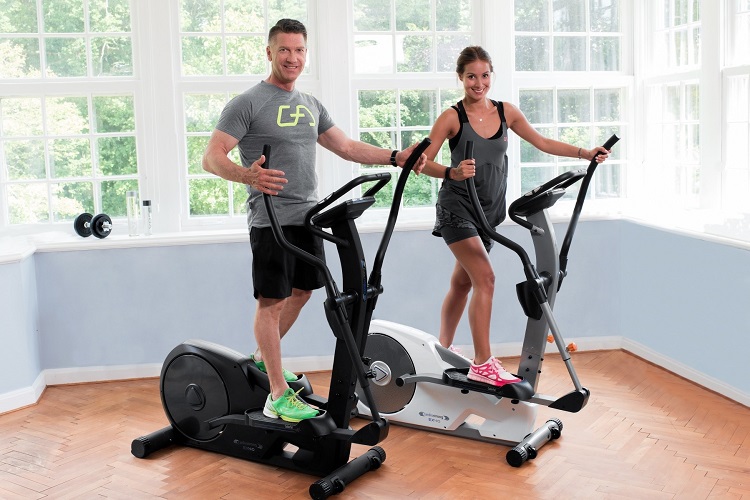
Using your elliptical machine has a ton of benefits, but most notably among them is the lack of damage on your knees.
An elliptical machine isn’t exactly cheap, but it can act as your primary cardio machine and is well worth the investment.
There’s still some impact, so if your knees are super bad, you should go on to the fifth item on this list and start there before you kick up the intensity with the elliptical machine.
#5 Calisthenics (Leg Raises)

Cardio is about raising your heart rate to burn calories. Calisthenics is a great way to burn calories, but instead of just targeting problem areas, it strengthens areas all over the body.
When it comes to your knees and other joints, these exercises only use the weight of your body as a counter, and you can already lift your body weight.
In calisthenics, you have a ton of different exercises at your disposal, but the best for your knees would be leg raises.
This strengthens the muscles in your legs to help you better support your own weight without relying on your joints to bear the brunt of it any longer.
The trick with calisthenics is to switch between different exercises frequently to really get your heart rate going. This helps you burn more calories while still keeping it joint-friendly.
#6 Water Aerobics
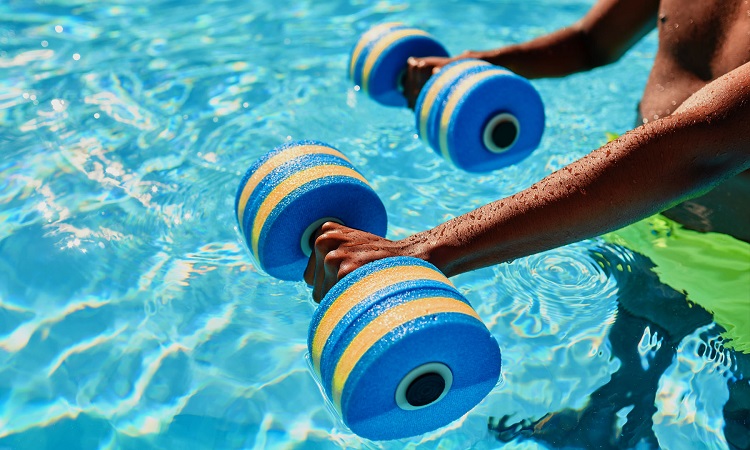
Just like with swimming practices, you want to spend as much time in the water as possible to eliminate strain on your joints while you work out the muscles around them.
This is the most effective way to reduce knee pain in the future while not increasing joint damage in the present.
Water aerobics doesn’t have to be done in a class, either—you can do something simple like reps of side steps with your legs underwater.
You can perform pool walking, which is exactly what you think it is: walking around in the pool and pushing the water with your legs as you go.
You can even do jumping jacks in the pool. It’s going to look a bit conspicuous, but it’s actually really helpful.
You want to target your lower body with these of course, but using an arc motion to move your body is basically like underwater side-stepping, you know? It all helps.
#7 Pilates & Yoga
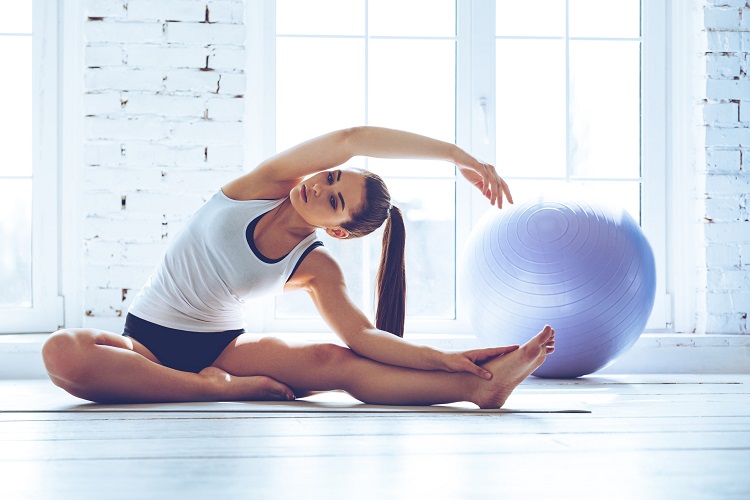
Pilates and yoga are wrapped up together in this section (don’t worry, we know they’re not actually the same thing) because of how limited they can be for joint-friendly exercises. With the right moves and classes, low-impact yoga can be extremely helpful.
Pilates may involve more stretching depending on what you do, and that’s great because it helps your joints by stretching cartilage.
It can help, but it should be compounded with other exercises we’ve talked about here to really bulk up your leg muscles and take the strain off of your knees.
#8 Squats
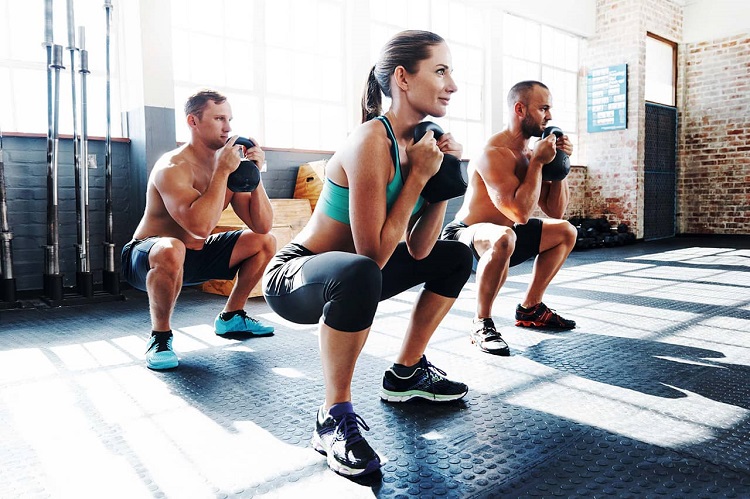
Squats don’t have to include a ton of weight with them, although they’re typically done on a smith machine or a squat rack.
If you do squats while just using your arms to stabilize yourself and add no additional weight, you can build your glute muscles. There’s a reason for this.
You’ll be squatting down and that will bear some level of impact on your knees, but your glute muscles are actually really beneficial when it comes to relieving stress on your joints.
Every pound of bodyweight on top of your knees is equivalent to four pounds of pressure, and that can add up quickly.
Your glute muscles help you stabilize yourself and improve your posture.
These muscles can take some of the brunts of the weight bearing down on your knees, and improving your posture can help with the way weight is distributed, alleviating some of the pressure from your joints.
These should be done after the other exercises we’ve mentioned when pain has begun to show signs of relief. This is considered a resistance exercise unless you try to do your reps quickly.
#9 Deadlifts
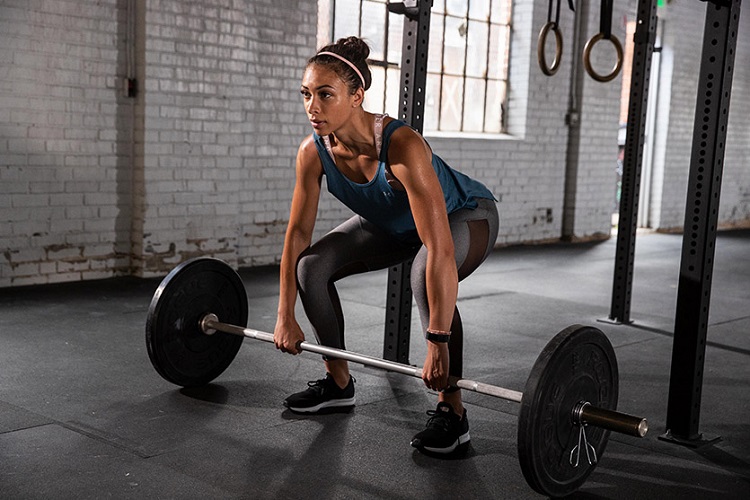
Lifting a heavy barbell isn’t inherently great for your knees, so you might be wondering what this is doing here. Deadlifts help with glute muscles, which we just talked about with squatting.
Beyond that, they also help with trap muscles located on your back and behind your neck. Both of these muscle groups help with one thing: posture.
Well, they also help you lose weight and tone your body, so the entire practice helps all across the board. Just like with squats, you don’t have to use a ton of weight when you do deadlifts.
Also, obligatory warning that this is resistance/strength training and not cardio, but that’s why we put it at the end—so you can upgrade and help your other muscles to stabilize your joints even better.
Resources: