
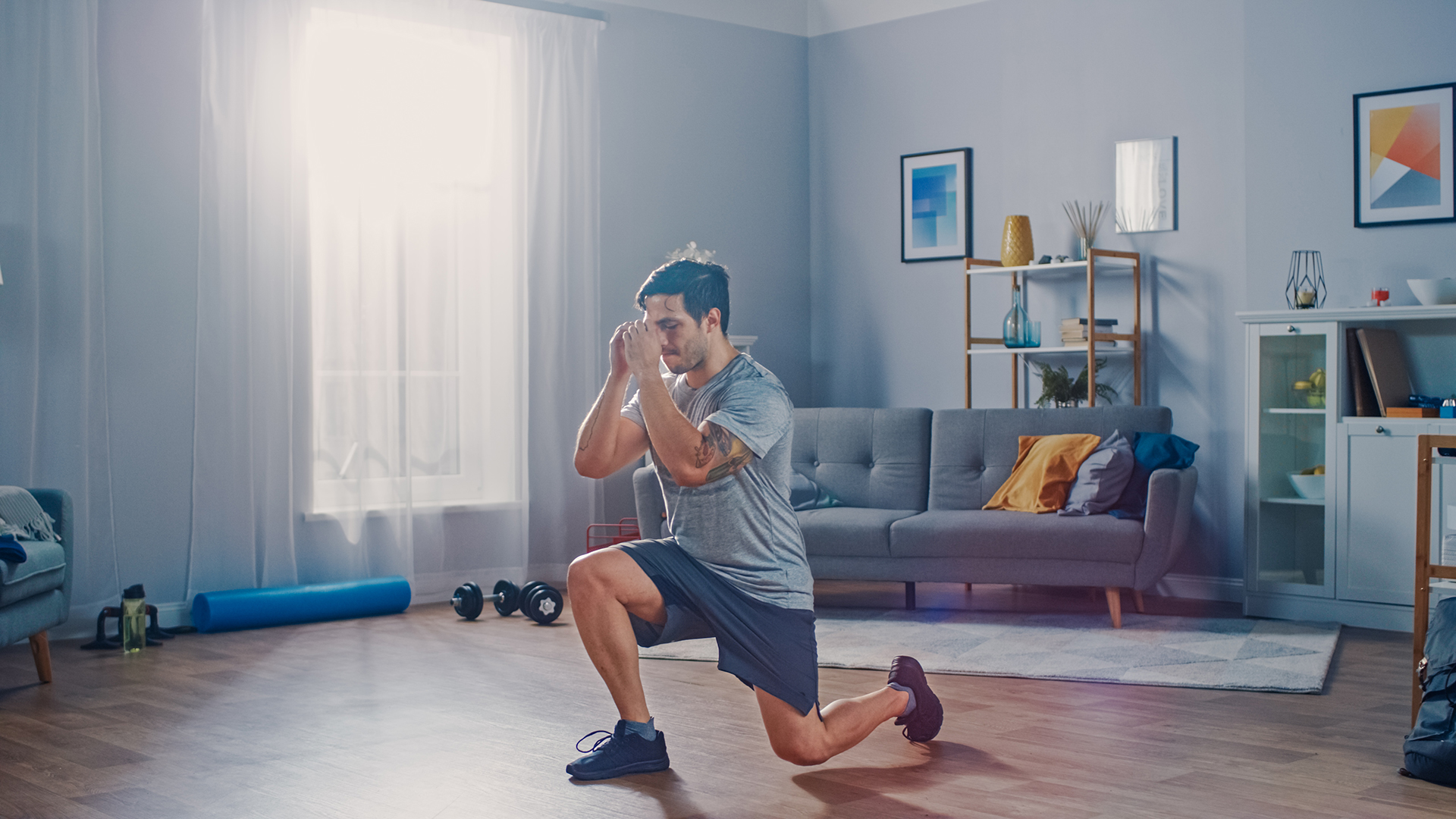
Training without equipment for weight gain can be done at home. But there's the challenge of getting the equipment.
Muscle-building exercises need some very heavy equipment which may be expensive. But you can conveniently build muscles at home without any equipment at all.
Getting noticeable results without going to the gym is good enough. Doing so without any equipment at all sounds too good to be true.
If you want to know how to build muscles at home without equipment, you may want to know how easy it is.
Well, not that easy, but still straightforward.
You can use your weight creatively as resistance to building the muscles. Although there are other equipment apart from weights that can build muscles, we would look at methods that can be used to build muscles at home.
Muscle-building exercises without equipment have some critical advantages, including allowing you to focus on the exercise without being unnecessarily burdened by the weights and added resistance.
Is it Possible to Build Muscles Without Equipment?
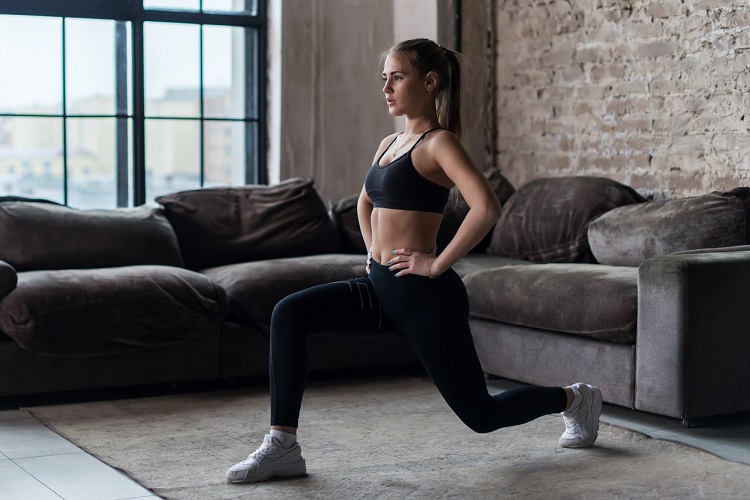
Yes. Muscle growth is triggered by exercise, which causes an increase in protein synthesis, leading to the production of muscle tissues.
Whether with equipment or not, exercises produce metabolic stress, which leads to the production of growth hormones.
We'll not go into the technical details of how this happens, but the idea is that the more intense the exercise is, the easier it is for muscles to develop.
You could build muscles without any equipment, primarily through bodyweight and band resistance. Several exercises can be used to achieve muscle growth without using the equipment.
You must, however, note that this should involve adjustments like increasing the reps and sets of each move, decreasing the rest time after each session, and increasing the tempo of the exercises.
Let's look at some exercises that can build muscles without any equipment.
No-Equipment Exercises for Muscle Gain
When doing muscle gain exercises without equipment, there's one golden rule you must keep in mind: they must be done at a higher tempo than if you were using the equipment. If you don't, it may be difficult, if not impossible, to achieve your goal of muscle gain.
Also, it is essential to know which exercises can be performed for muscle development. Since there is no equipment needed, not all exercises can help muscle development.
We have highlighted the essential activities that can help you build your muscles without any equipment. Also, remember that you may need to combine about three to four of these exercises per session.
There are hundreds of such exercises, but we've highlighted some trendy ones.
#1 Push-ups
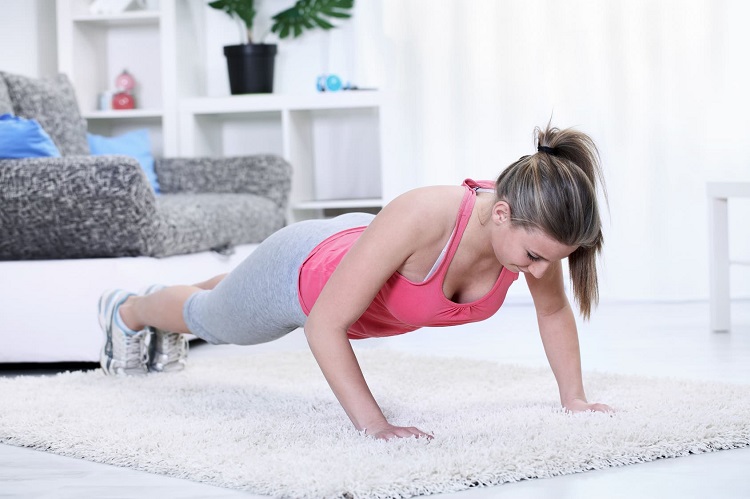
When you want to build the muscles of your shoulders, triceps, and core, go for push-ups. There are different variations of the push-up exercises, but they all follow the same pattern.
Push-ups are one of the commonest exercises performed to keep the body fit.
Although the push-up primarily involves the abdominal muscles, several joints and muscles in the body are engaged when completing the exercise.
How it's done
- Begin by lying face down with your hands a bit wider than your shoulders.
- Stretch out your legs and ensure they are resting on the toes.
- Also, stretch out your hands,
- While inhaling, slowly bend your elbows as you lower yourself until your elbows are at a right angle.
- Then exhale and return to the starting position by pushing yourself back up with your hands.
#2 Burpees
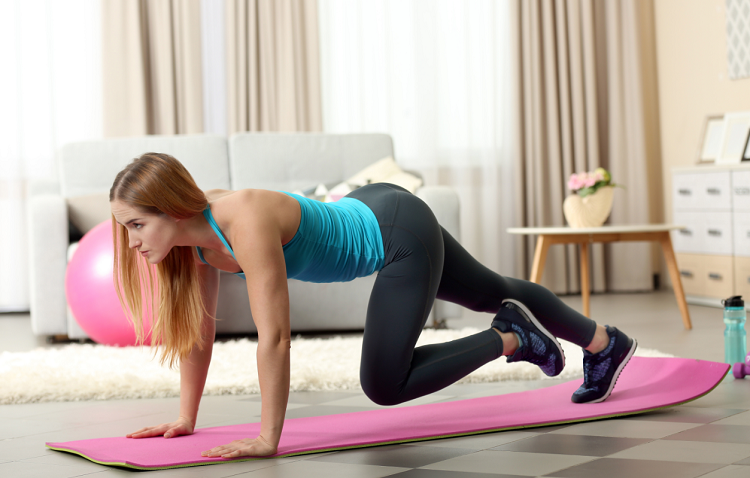
A burpee is a push-up, and a leap all rolled into one. It builds the muscles and keeps the body fit and strong. As a calisthenics workout, burpees rely on your body weight for resistance.
The target muscles of burpees are in the legs, hips, abdomen, arms, chest, and shoulders. If you can do up to 20 burpees in a minute, you can lose up to 15 calories!
How it's done
You already know how to do a push-up.
- Immediately after one push-up, jump on your feet with your arms over your head.
- As your hands are in the air, over your head, land with your knees bent as you prepare to take the position for another push-up.
- The faster you can complete the cycle, the better.
#3 Squats
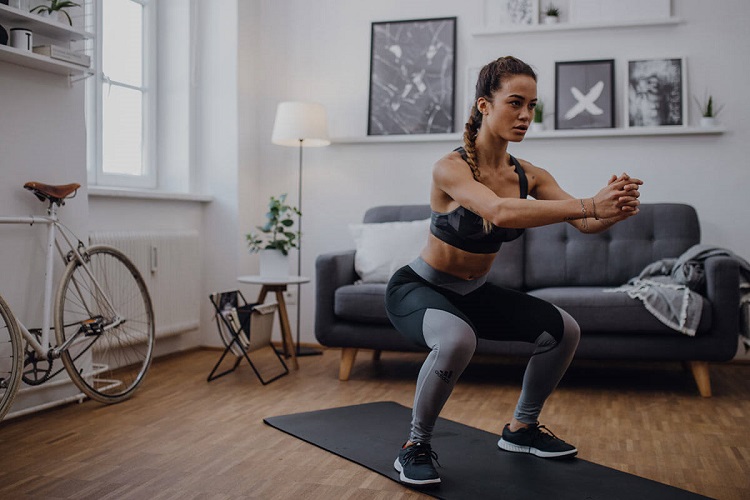
Squats are ideal muscle-building exercises that address the hamstrings, quadriceps, calves, and core. Squats can be performed in various ways and have different parts of the body it addresses, but squats can generally be performed this way.
How it's done
- Stand with your arms pointed out straight in front of you, palms facing down.
- Bend the knees so that your hips are pushed back and you assume the squatting position.
- Ensure the knees and the hips are at a right angle (90°) to each other. You should aim to sink lower than this if you can.
- Once you've achieved this position, push yourself back till you stand upright.
When squatting, ensure the body's weight rests on the balls of the feet and not the entire sole, and make sure your back is straight and the torso is upright throughout the motion.
#4 Sit-ups
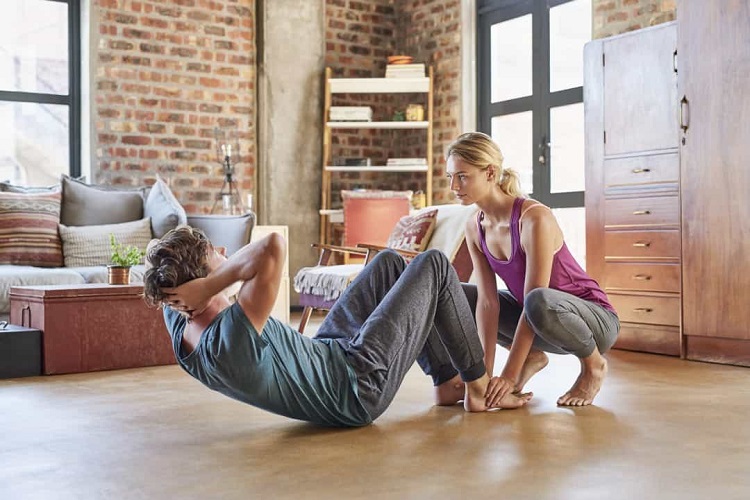
The sit-up is targeted at the abdominals, especially the upper abdominal muscles. Getting sit-ups right requires the core muscles to be at their best. There are different variations of the sit-up, which you can adapt to suit your preferences.
But let's look at how to do the traditional sit-up.
How it's done
- Lie on your back with your knees bent., and keep your feet flat on the ground.
- Put your hands behind your head, just at the base of your skull, your fingers interlocking to support it firmly.
- Exhale and lift your upper body until your abdomen can touch your thigh, and return your back to the floor while inhaling.
Remember to keep your hands behind your head through the motion.
#5 Crunches
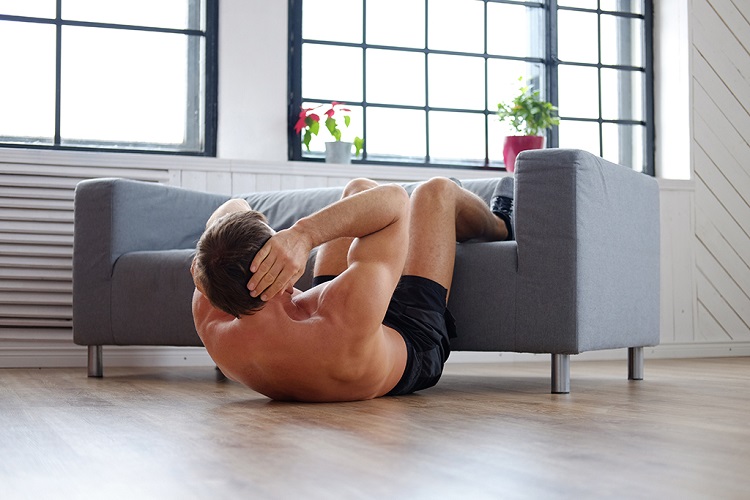
Crunches target the lower abdominals and are the basic ab workouts designed to produce and keep the six-packs.
Although crunches keep the abdominal muscles in shape, several other muscles in the body are also developed when crunches are performed.
How it's done
- Lie with your back on the floor and place your hands behind your head.
- Keep your feet flat on the ground, causing your knee to point upwards.
- While contracting your abdominal muscles, lift your shoulder off the ground, keeping it that way for a few seconds.
- Keep breathing while at it, and lower your shoulder. Repeat the procedure as many times as possible.
Other exercises include Pull-ups, Mountain climbers, and Plank.
Dietary Needs for Building Muscles Without Weights
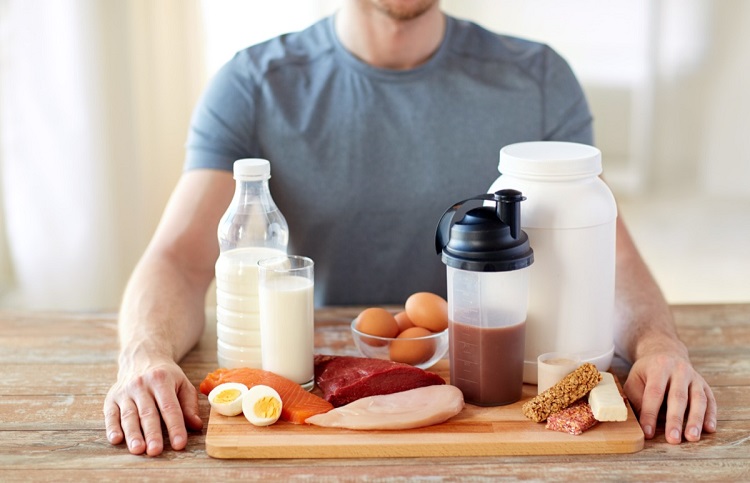
There are specific nutritional rules to follow when you're building your muscles. Remember, apart from exercises, diet is the most critical factor determining how well or how fast your muscles can develop.
Remember, you're not lifting weights, so you need to be on your best diet to achieve the necessary muscle growth.
At the top of the list is protein. Muscles, as well as body tissues, are made up of protein. You cannot build muscles without making a rich-protein diet your priority.
The rule is that you need to consume 1-1.5 grams of protein for every pound of body weight per day, which is about twice the recommended amount for a regular diet.
So, you need twice the recommended protein intake if you're building muscles.
This is logical. Amino acids, which proteins are made of, are the very building block of muscle proteins.
Your protein sources should also be limited to "lean" sources like dairy, eggs, fish, and chicken. Depending on how much you need protein, you may go for protein supplements as well.
Don't also forget to incorporate carbohydrates and fats in recommended amounts.
Harming Habits to Avoid

The disciplines go together when it's got to do with building muscles at home without equipment. You must exercise actively, eat right, and avoid habits that may effectively sabotage your goal.
One such pattern is getting too little sleep. There are many reasons to get enough sleep every night while building muscles.
One is that muscle-building hormones are produced when the body rests at night. When the body is always tensed with too little rest, the muscles may not be able to develop at the needed level.
It is recommended that you get as much as 8 hours of sleep every night when building muscles at home without equipment.
Also, avoid downing too many protein additives. If you're seeking to build muscles at home without equipment, you may be tempted to keep eating protein bars when hungry. After all, it would build the muscles! No.
Additives should not be the primary source of your protein, and you should ensure there's a proper balance of all food classes.
Another habit to avoid would be focusing on only one (favorite) exercise. To build muscles at home without equipment, you need to master various exercises that target different parts of the body.
You won't get results if you concentrate on only somebody's muscles.
Conclusion
Building muscles requires equipment to work successfully. But in certain instances, it is possible to build muscles at home without equipment.
This can be done by engaging in several exercises that can develop the muscles while burning calories. With patience and consistency, this goal is achievable.
Resources: